


Key Insights
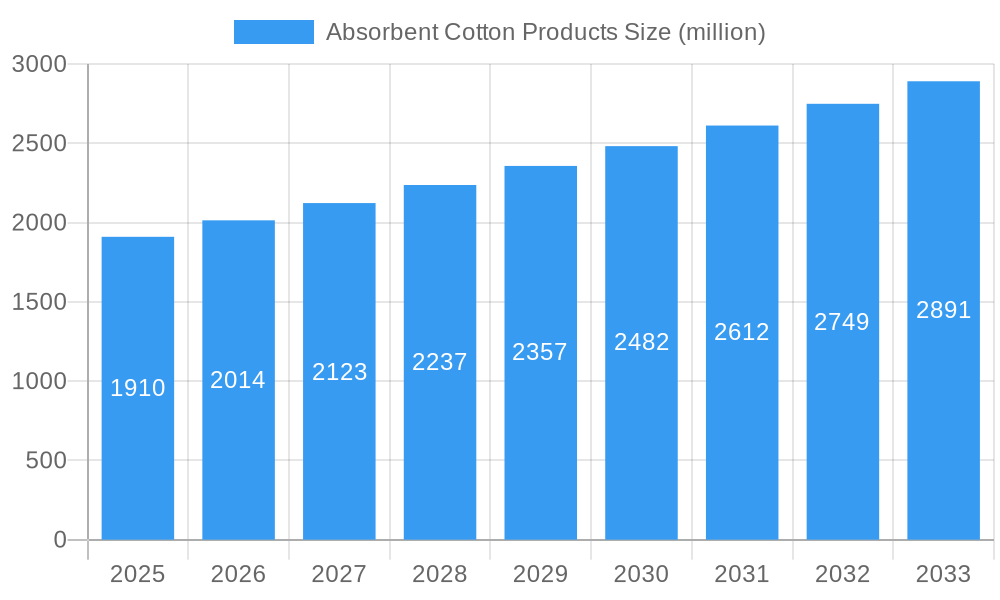
The global Absorbent Cotton Products market is poised for significant expansion, projected to reach USD 1.91 billion in 2025 with a robust Compound Annual Growth Rate (CAGR) of 5.4% through 2033. This upward trajectory is primarily propelled by an increasing demand for personal hygiene products, a growing awareness of the benefits of natural and biodegradable materials, and the expanding healthcare sector, particularly in emerging economies. The widespread use of absorbent cotton in applications such as medical dressings, wound care, feminine hygiene products, and baby care items underpins its consistent market demand. Furthermore, advancements in manufacturing processes that enhance absorbency, softness, and purity are contributing to product innovation and consumer preference. The rising disposable incomes in developing regions are also fueling the adoption of higher-quality absorbent cotton products, further augmenting market growth.
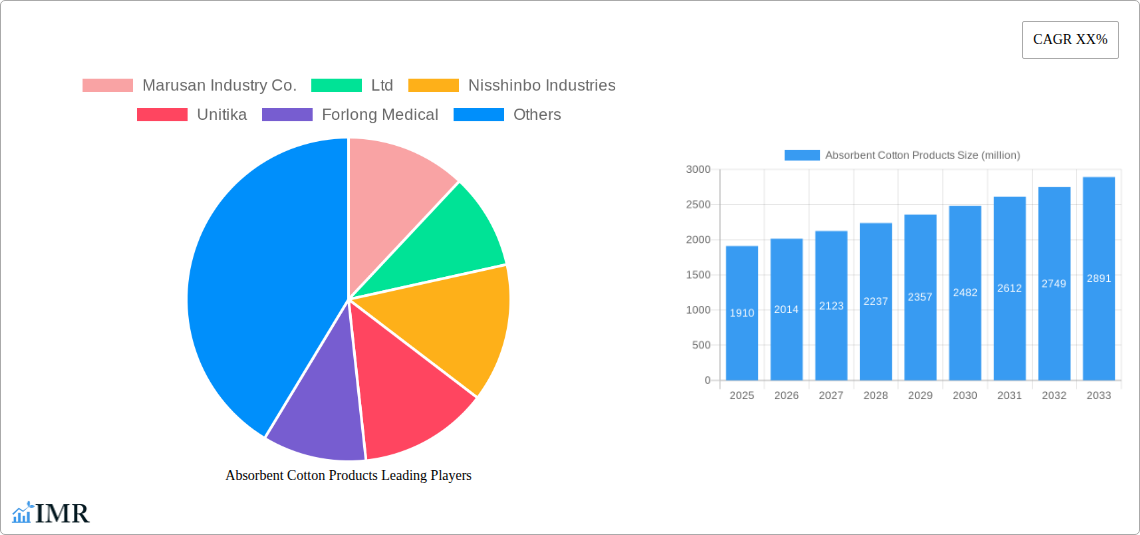
Absorbent Cotton Products Market Size (In Billion)

The market's growth is further supported by increasing investments in research and development to create specialized absorbent cotton products for niche applications, alongside a growing preference for eco-friendly and sustainable alternatives. While the market presents substantial opportunities, it also faces certain restraints. Fluctuations in raw material prices, particularly cotton, can impact profitability. Moreover, the availability of synthetic alternatives in some applications might pose a competitive challenge. However, the inherent biodegradability and hypoallergenic properties of cotton continue to give it a significant advantage. The market is segmented by application, with Wipes, Cosmetic Pads, and Surgical Cotton being key revenue generators, and by type, with Cambric and Canvas cotton exhibiting strong adoption. Geographically, Asia Pacific is emerging as a dominant region due to its large population, increasing healthcare expenditure, and a burgeoning personal care industry.
Absorbent Cotton Products Company Market Share
Absorbent Cotton Products Market Dynamics & Structure
The global absorbent cotton products market exhibits a moderate concentration, with key players like Marusan Industry Co., Ltd, Nisshinbo Industries, and Unitika holding significant shares. Technological innovation is a primary driver, focusing on enhanced absorbency, improved softness, and sustainable manufacturing processes. Regulatory frameworks, particularly those concerning medical-grade cotton and environmental compliance, shape production and product development. Competitive product substitutes, such as synthetic fibers and reusable alternatives, present a constant challenge, albeit with limitations in natural feel and biodegradability. End-user demographics are increasingly influenced by a growing health-conscious population and rising disposable incomes, particularly in emerging economies. Mergers and acquisitions (M&A) trends are evident, with larger companies acquiring smaller innovators to expand their product portfolios and market reach. For instance, the period saw approximately $1.5 billion in M&A deals within the broader hygiene and personal care segment, impacting absorbent cotton applications. Innovation barriers include the high cost of advanced processing technologies and stringent quality control requirements for medical applications.
- Market Concentration: Moderate, with top players holding substantial but not dominant market shares.
- Technological Drivers: Focus on superabsorbency, antimicrobial properties, and eco-friendly production.
- Regulatory Frameworks: Strict guidelines for medical-grade products and increasing emphasis on environmental sustainability.
- Competitive Substitutes: Synthetic fibers and reusable alternatives offer cost advantages but lack natural properties.
- End-User Demographics: Growing demand from healthcare, personal care, and baby care sectors, driven by an aging global population and increased hygiene awareness.
- M&A Trends: Strategic acquisitions to broaden product offerings and gain market access, with estimated deal volumes in the billions.
Absorbent Cotton Products Growth Trends & Insights
The absorbent cotton products market is poised for robust expansion, driven by escalating demand across diverse applications. The market size, projected to reach $28.5 billion by 2033 from an estimated $18.2 billion in 2025, is exhibiting a Compound Annual Growth Rate (CAGR) of approximately 6.5% during the forecast period. This growth is underpinned by increasing health and hygiene awareness globally, particularly post-pandemic, leading to higher adoption rates of products like surgical cotton and cosmetic pads. Technological advancements are disrupting the landscape, with innovations in fiber processing and material science enabling the development of ultra-absorbent and hypoallergenic cotton products. Consumer behavior shifts towards natural, biodegradable, and sustainably sourced products are significantly influencing purchasing decisions, creating a premium for ethically produced absorbent cotton.
The application of absorbent cotton in the healthcare sector, specifically for wound care and surgical procedures, continues to be a cornerstone of market growth. The rising incidence of chronic diseases and the increasing volume of surgical interventions worldwide directly translate into a sustained demand for high-quality surgical cotton. Furthermore, the personal care segment, encompassing cosmetic pads, cotton balls, and wipes, is witnessing substantial growth fueled by evolving beauty routines and a burgeoning e-commerce market. The convenience and disposability of these products, coupled with their gentle nature, make them indispensable for daily use.
Emerging economies are becoming significant growth engines, owing to expanding middle-class populations, improved healthcare infrastructure, and a growing emphasis on personal grooming and hygiene. Government initiatives aimed at promoting healthcare access and manufacturing capabilities further bolster market expansion in these regions. The textile industry's demand for absorbent cotton in quilting and home furnishings, while mature, also contributes steadily to the overall market volume. However, the market also faces challenges from volatile raw material prices and intense competition, necessitating continuous innovation and cost optimization strategies from manufacturers. The forecast indicates a sustained upward trajectory, with a market penetration rate expected to climb steadily as awareness and accessibility of absorbent cotton products increase across all consumer segments and geographical areas.
Dominant Regions, Countries, or Segments in Absorbent Cotton Products
The global absorbent cotton products market is characterized by regional dominance, with North America and Europe historically leading in consumption due to established healthcare infrastructure, high disposable incomes, and a strong emphasis on hygiene and personal care. However, the Asia Pacific region is rapidly emerging as a dominant force, projected to exhibit the highest growth rate in the coming years. This surge is attributed to several key drivers, including a massive and growing population, increasing healthcare expenditure, rising disposable incomes in countries like China and India, and a burgeoning middle class with a greater awareness of health and hygiene. The region's expanding manufacturing capabilities also contribute to its growing prominence in both production and consumption.
Within the Asia Pacific, China stands out as a pivotal country, driving significant market share in absorbent cotton products. Its vast population fuels demand across all segments, from medical applications to everyday consumer goods. Government initiatives supporting healthcare development and a growing domestic manufacturing base further bolster China's position. India follows closely, with a rapidly expanding healthcare sector and a large consumer base increasingly prioritizing personal care and hygiene. The "Make in India" initiative and increasing investments in the textile and healthcare industries are further accelerating growth.
From an application perspective, Surgical Cotton is a consistently dominant segment, driven by the global increase in surgical procedures and the critical need for sterile, absorbent materials in healthcare settings. The segment's growth is further propelled by advancements in wound management and the demand for specialized medical-grade cotton. Close behind is Wipes, a segment experiencing exponential growth due to their versatility in household cleaning, personal hygiene, and industrial applications. The convenience and disposability of wipes, coupled with innovations in material and formulation, contribute to their widespread adoption. Cosmetic Pads also represent a substantial and growing segment, fueled by the booming beauty and personal care industry, particularly in emerging markets where cosmetic consumption is on the rise.
In terms of product types, while Cambric remains a staple for various absorbent cotton applications due to its absorbency and cost-effectiveness, the market is witnessing increased demand for specialized variants. The overall dominance is therefore a confluence of strong economic policies supporting manufacturing and healthcare, robust infrastructure facilitating distribution, and a rapidly evolving consumer landscape increasingly prioritizing health, hygiene, and personal care. The market share of the Asia Pacific region is estimated to be approximately 38% of the global market in 2025, with projections indicating it will surpass 45% by 2033, signifying a significant shift in global market dynamics.
Absorbent Cotton Products Product Landscape
The absorbent cotton products landscape is characterized by continuous innovation aimed at enhancing performance and expanding applications. Manufacturers are focusing on developing ultra-absorbent cotton fibers through advanced processing techniques, enabling products that can absorb significantly more liquid with a lighter weight. Innovations include the integration of antimicrobial agents for enhanced hygiene in medical and personal care items, and the development of hypoallergenic variants to cater to sensitive skin. Applications are diversifying beyond traditional uses, with specialized absorbent cotton being utilized in new areas such as filtration media for electronics and advanced packaging solutions. Performance metrics such as absorption capacity (e.g., grams of liquid per gram of cotton), softness, tensile strength, and biodegradability are key differentiators. Unique selling propositions often revolve around organic sourcing, sustainable manufacturing, and superior comfort and efficacy in intended applications.
Key Drivers, Barriers & Challenges in Absorbent Cotton Products
The absorbent cotton products market is propelled by several key drivers. Rising health and hygiene awareness globally, amplified by recent public health events, is a primary catalyst, increasing demand for products like surgical cotton and personal hygiene wipes. Growing healthcare expenditure and an aging global population are also significant drivers, particularly for medical-grade absorbent cotton used in wound care and surgeries. Furthermore, increasing disposable incomes in emerging economies are fueling demand for personal care and cosmetic applications. Technological advancements in fiber processing and material science are enabling the creation of enhanced performance products.
However, the market faces several barriers and challenges. Volatile raw material prices, specifically fluctuations in cotton fiber costs due to weather patterns and agricultural factors, can significantly impact profitability. Intense price competition from both established players and new entrants, especially in the commoditized segments, puts pressure on margins. Stringent regulatory requirements, particularly for medical-grade products, necessitate substantial investment in quality control and certification processes. Environmental concerns and the drive for sustainability are also becoming challenges, requiring manufacturers to invest in eco-friendly production methods and explore biodegradable alternatives. Supply chain disruptions, as seen in recent global events, can also pose significant challenges to consistent product availability.
Emerging Opportunities in Absorbent Cotton Products
Emerging opportunities in the absorbent cotton products industry lie in the development of specialized, high-value applications. The growing demand for sustainable and biodegradable packaging solutions presents a significant avenue, as absorbent cotton can be engineered for various protective and absorbent packaging needs. The elderly care market is expanding rapidly, creating opportunities for specialized incontinence products, wound care dressings, and gentle personal hygiene items made from premium absorbent cotton. Furthermore, the integration of smart technologies into absorbent cotton products, such as sensors for moisture detection in medical applications or hygiene monitoring, represents a futuristic yet attainable opportunity. Untapped markets in regions with developing healthcare infrastructure and a growing middle class also offer substantial growth potential for basic absorbent cotton products.
Growth Accelerators in the Absorbent Cotton Products Industry
Long-term growth in the absorbent cotton products industry is being catalyzed by significant technological breakthroughs and strategic market expansion. The development of advanced fiber processing technologies that enhance absorbency, strength, and softness is a major accelerator, allowing for the creation of premium products that command higher prices. Strategic partnerships and collaborations between cotton producers, manufacturers, and end-product companies are fostering innovation and streamlining supply chains, leading to more efficient product development and market penetration. Furthermore, focused market expansion into emerging economies through localized production and distribution networks is unlocking substantial growth potential driven by increasing consumer demand for hygiene and healthcare products. The ongoing trend towards eco-friendly and sustainable products is also a powerful accelerator, as companies investing in organic cotton sourcing and environmentally conscious manufacturing processes are gaining a competitive edge and attracting a growing segment of environmentally aware consumers.
Key Players Shaping the Absorbent Cotton Products Market
- Marusan Industry Co.,Ltd
- Nisshinbo Industries
- Unitika
- Forlong Medical
- Barakat Cotton
- Jaycot Industries
- Shanti Surgicals
- Piaoan Group
- IHSAN Sons
- Cottonera
Notable Milestones in Absorbent Cotton Products Sector
- 2019: Introduction of biodegradable processing techniques for medical-grade surgical cotton, impacting market sustainability efforts.
- 2020: Increased demand for household cleaning wipes and sanitizing products due to the global pandemic, boosting cotton ball and wipe manufacturing.
- 2021: Marusan Industry Co.,Ltd announces expansion of R&D into advanced superabsorbent cotton fibers.
- 2022: Nisshinbo Industries enhances its commitment to organic cotton sourcing for cosmetic pads.
- 2023: Piaoan Group invests in new production lines for specialized medical textiles utilizing absorbent cotton.
- 2024: Unitika showcases advancements in hypoallergenic cotton for sensitive skincare applications.
In-Depth Absorbent Cotton Products Market Outlook
The absorbent cotton products market is set for a dynamic future, with growth accelerators centered on continuous innovation and strategic market penetration. The outlook is overwhelmingly positive, driven by sustained demand from the healthcare and personal care sectors, amplified by rising global health consciousness. The increasing adoption of sustainable practices and biodegradable materials will define market leadership, creating opportunities for companies prioritizing eco-friendly production. Emerging markets, particularly in Asia Pacific, will continue to be crucial growth engines, supported by expanding middle classes and improving healthcare infrastructure. Strategic collaborations and technological advancements in fiber processing will lead to the development of higher-performance, value-added products, ensuring continued market expansion and profitability for key industry players.
Absorbent Cotton Products Segmentation
-
1. Application
- 1.1. Wipes
- 1.2. Cotton Balls
- 1.3. Quilt
- 1.4. Cosmetic Pad
- 1.5. Surgical Cotton
- 1.6. Others
-
2. Types
- 2.1. Cambric
- 2.2. Canvas
- 2.3. Corduroy
- 2.4. Denim
Absorbent Cotton Products Segmentation By Geography
-
1. North America
- 1.1. United States
- 1.2. Canada
- 1.3. Mexico
-
2. South America
- 2.1. Brazil
- 2.2. Argentina
- 2.3. Rest of South America
-
3. Europe
- 3.1. United Kingdom
- 3.2. Germany
- 3.3. France
- 3.4. Italy
- 3.5. Spain
- 3.6. Russia
- 3.7. Benelux
- 3.8. Nordics
- 3.9. Rest of Europe
-
4. Middle East & Africa
- 4.1. Turkey
- 4.2. Israel
- 4.3. GCC
- 4.4. North Africa
- 4.5. South Africa
- 4.6. Rest of Middle East & Africa
-
5. Asia Pacific
- 5.1. China
- 5.2. India
- 5.3. Japan
- 5.4. South Korea
- 5.5. ASEAN
- 5.6. Oceania
- 5.7. Rest of Asia Pacific
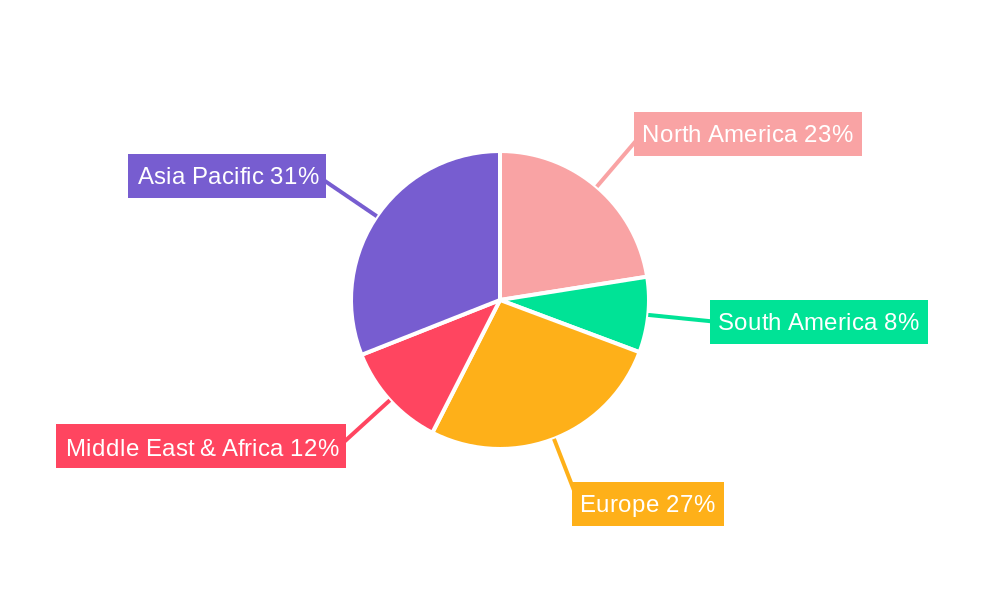
Absorbent Cotton Products Regional Market Share
Geographic Coverage of Absorbent Cotton Products
Absorbent Cotton Products REPORT HIGHLIGHTS
| Aspects | Details |
|---|---|
| Study Period | 2020-2034 |
| Base Year | 2025 |
| Estimated Year | 2026 |
| Forecast Period | 2026-2034 |
| Historical Period | 2020-2025 |
| Growth Rate | CAGR of 5.4% from 2020-2034 |
| Segmentation |
|
Table of Contents
- 1. Introduction
- 1.1. Research Scope
- 1.2. Market Segmentation
- 1.3. Research Methodology
- 1.4. Definitions and Assumptions
- 2. Executive Summary
- 2.1. Introduction
- 3. Market Dynamics
- 3.1. Introduction
- 3.2. Market Drivers
- 3.3. Market Restrains
- 3.4. Market Trends
- 4. Market Factor Analysis
- 4.1. Porters Five Forces
- 4.2. Supply/Value Chain
- 4.3. PESTEL analysis
- 4.4. Market Entropy
- 4.5. Patent/Trademark Analysis
- 5. Global Absorbent Cotton Products Analysis, Insights and Forecast, 2020-2032
- 5.1. Market Analysis, Insights and Forecast - by Application
- 5.1.1. Wipes
- 5.1.2. Cotton Balls
- 5.1.3. Quilt
- 5.1.4. Cosmetic Pad
- 5.1.5. Surgical Cotton
- 5.1.6. Others
- 5.2. Market Analysis, Insights and Forecast - by Types
- 5.2.1. Cambric
- 5.2.2. Canvas
- 5.2.3. Corduroy
- 5.2.4. Denim
- 5.3. Market Analysis, Insights and Forecast - by Region
- 5.3.1. North America
- 5.3.2. South America
- 5.3.3. Europe
- 5.3.4. Middle East & Africa
- 5.3.5. Asia Pacific
- 5.1. Market Analysis, Insights and Forecast - by Application
- 6. North America Absorbent Cotton Products Analysis, Insights and Forecast, 2020-2032
- 6.1. Market Analysis, Insights and Forecast - by Application
- 6.1.1. Wipes
- 6.1.2. Cotton Balls
- 6.1.3. Quilt
- 6.1.4. Cosmetic Pad
- 6.1.5. Surgical Cotton
- 6.1.6. Others
- 6.2. Market Analysis, Insights and Forecast - by Types
- 6.2.1. Cambric
- 6.2.2. Canvas
- 6.2.3. Corduroy
- 6.2.4. Denim
- 6.1. Market Analysis, Insights and Forecast - by Application
- 7. South America Absorbent Cotton Products Analysis, Insights and Forecast, 2020-2032
- 7.1. Market Analysis, Insights and Forecast - by Application
- 7.1.1. Wipes
- 7.1.2. Cotton Balls
- 7.1.3. Quilt
- 7.1.4. Cosmetic Pad
- 7.1.5. Surgical Cotton
- 7.1.6. Others
- 7.2. Market Analysis, Insights and Forecast - by Types
- 7.2.1. Cambric
- 7.2.2. Canvas
- 7.2.3. Corduroy
- 7.2.4. Denim
- 7.1. Market Analysis, Insights and Forecast - by Application
- 8. Europe Absorbent Cotton Products Analysis, Insights and Forecast, 2020-2032
- 8.1. Market Analysis, Insights and Forecast - by Application
- 8.1.1. Wipes
- 8.1.2. Cotton Balls
- 8.1.3. Quilt
- 8.1.4. Cosmetic Pad
- 8.1.5. Surgical Cotton
- 8.1.6. Others
- 8.2. Market Analysis, Insights and Forecast - by Types
- 8.2.1. Cambric
- 8.2.2. Canvas
- 8.2.3. Corduroy
- 8.2.4. Denim
- 8.1. Market Analysis, Insights and Forecast - by Application
- 9. Middle East & Africa Absorbent Cotton Products Analysis, Insights and Forecast, 2020-2032
- 9.1. Market Analysis, Insights and Forecast - by Application
- 9.1.1. Wipes
- 9.1.2. Cotton Balls
- 9.1.3. Quilt
- 9.1.4. Cosmetic Pad
- 9.1.5. Surgical Cotton
- 9.1.6. Others
- 9.2. Market Analysis, Insights and Forecast - by Types
- 9.2.1. Cambric
- 9.2.2. Canvas
- 9.2.3. Corduroy
- 9.2.4. Denim
- 9.1. Market Analysis, Insights and Forecast - by Application
- 10. Asia Pacific Absorbent Cotton Products Analysis, Insights and Forecast, 2020-2032
- 10.1. Market Analysis, Insights and Forecast - by Application
- 10.1.1. Wipes
- 10.1.2. Cotton Balls
- 10.1.3. Quilt
- 10.1.4. Cosmetic Pad
- 10.1.5. Surgical Cotton
- 10.1.6. Others
- 10.2. Market Analysis, Insights and Forecast - by Types
- 10.2.1. Cambric
- 10.2.2. Canvas
- 10.2.3. Corduroy
- 10.2.4. Denim
- 10.1. Market Analysis, Insights and Forecast - by Application
- 11. Competitive Analysis
- 11.1. Global Market Share Analysis 2025
- 11.2. Company Profiles
- 11.2.1 Marusan Industry Co.
- 11.2.1.1. Overview
- 11.2.1.2. Products
- 11.2.1.3. SWOT Analysis
- 11.2.1.4. Recent Developments
- 11.2.1.5. Financials (Based on Availability)
- 11.2.2 Ltd
- 11.2.2.1. Overview
- 11.2.2.2. Products
- 11.2.2.3. SWOT Analysis
- 11.2.2.4. Recent Developments
- 11.2.2.5. Financials (Based on Availability)
- 11.2.3 Nisshinbo Industries
- 11.2.3.1. Overview
- 11.2.3.2. Products
- 11.2.3.3. SWOT Analysis
- 11.2.3.4. Recent Developments
- 11.2.3.5. Financials (Based on Availability)
- 11.2.4 Unitika
- 11.2.4.1. Overview
- 11.2.4.2. Products
- 11.2.4.3. SWOT Analysis
- 11.2.4.4. Recent Developments
- 11.2.4.5. Financials (Based on Availability)
- 11.2.5 Forlong Medical
- 11.2.5.1. Overview
- 11.2.5.2. Products
- 11.2.5.3. SWOT Analysis
- 11.2.5.4. Recent Developments
- 11.2.5.5. Financials (Based on Availability)
- 11.2.6 Barakat Cotton
- 11.2.6.1. Overview
- 11.2.6.2. Products
- 11.2.6.3. SWOT Analysis
- 11.2.6.4. Recent Developments
- 11.2.6.5. Financials (Based on Availability)
- 11.2.7 Jaycot Industries
- 11.2.7.1. Overview
- 11.2.7.2. Products
- 11.2.7.3. SWOT Analysis
- 11.2.7.4. Recent Developments
- 11.2.7.5. Financials (Based on Availability)
- 11.2.8 Shanti Surgicals
- 11.2.8.1. Overview
- 11.2.8.2. Products
- 11.2.8.3. SWOT Analysis
- 11.2.8.4. Recent Developments
- 11.2.8.5. Financials (Based on Availability)
- 11.2.9 Piaoan Group
- 11.2.9.1. Overview
- 11.2.9.2. Products
- 11.2.9.3. SWOT Analysis
- 11.2.9.4. Recent Developments
- 11.2.9.5. Financials (Based on Availability)
- 11.2.10 IHSAN Sons
- 11.2.10.1. Overview
- 11.2.10.2. Products
- 11.2.10.3. SWOT Analysis
- 11.2.10.4. Recent Developments
- 11.2.10.5. Financials (Based on Availability)
- 11.2.11 Cottonera
- 11.2.11.1. Overview
- 11.2.11.2. Products
- 11.2.11.3. SWOT Analysis
- 11.2.11.4. Recent Developments
- 11.2.11.5. Financials (Based on Availability)
- 11.2.1 Marusan Industry Co.
List of Figures
- Figure 1: Global Absorbent Cotton Products Revenue Breakdown (undefined, %) by Region 2025 & 2033
- Figure 2: Global Absorbent Cotton Products Volume Breakdown (K, %) by Region 2025 & 2033
- Figure 3: North America Absorbent Cotton Products Revenue (undefined), by Application 2025 & 2033
- Figure 4: North America Absorbent Cotton Products Volume (K), by Application 2025 & 2033
- Figure 5: North America Absorbent Cotton Products Revenue Share (%), by Application 2025 & 2033
- Figure 6: North America Absorbent Cotton Products Volume Share (%), by Application 2025 & 2033
- Figure 7: North America Absorbent Cotton Products Revenue (undefined), by Types 2025 & 2033
- Figure 8: North America Absorbent Cotton Products Volume (K), by Types 2025 & 2033
- Figure 9: North America Absorbent Cotton Products Revenue Share (%), by Types 2025 & 2033
- Figure 10: North America Absorbent Cotton Products Volume Share (%), by Types 2025 & 2033
- Figure 11: North America Absorbent Cotton Products Revenue (undefined), by Country 2025 & 2033
- Figure 12: North America Absorbent Cotton Products Volume (K), by Country 2025 & 2033
- Figure 13: North America Absorbent Cotton Products Revenue Share (%), by Country 2025 & 2033
- Figure 14: North America Absorbent Cotton Products Volume Share (%), by Country 2025 & 2033
- Figure 15: South America Absorbent Cotton Products Revenue (undefined), by Application 2025 & 2033
- Figure 16: South America Absorbent Cotton Products Volume (K), by Application 2025 & 2033
- Figure 17: South America Absorbent Cotton Products Revenue Share (%), by Application 2025 & 2033
- Figure 18: South America Absorbent Cotton Products Volume Share (%), by Application 2025 & 2033
- Figure 19: South America Absorbent Cotton Products Revenue (undefined), by Types 2025 & 2033
- Figure 20: South America Absorbent Cotton Products Volume (K), by Types 2025 & 2033
- Figure 21: South America Absorbent Cotton Products Revenue Share (%), by Types 2025 & 2033
- Figure 22: South America Absorbent Cotton Products Volume Share (%), by Types 2025 & 2033
- Figure 23: South America Absorbent Cotton Products Revenue (undefined), by Country 2025 & 2033
- Figure 24: South America Absorbent Cotton Products Volume (K), by Country 2025 & 2033
- Figure 25: South America Absorbent Cotton Products Revenue Share (%), by Country 2025 & 2033
- Figure 26: South America Absorbent Cotton Products Volume Share (%), by Country 2025 & 2033
- Figure 27: Europe Absorbent Cotton Products Revenue (undefined), by Application 2025 & 2033
- Figure 28: Europe Absorbent Cotton Products Volume (K), by Application 2025 & 2033
- Figure 29: Europe Absorbent Cotton Products Revenue Share (%), by Application 2025 & 2033
- Figure 30: Europe Absorbent Cotton Products Volume Share (%), by Application 2025 & 2033
- Figure 31: Europe Absorbent Cotton Products Revenue (undefined), by Types 2025 & 2033
- Figure 32: Europe Absorbent Cotton Products Volume (K), by Types 2025 & 2033
- Figure 33: Europe Absorbent Cotton Products Revenue Share (%), by Types 2025 & 2033
- Figure 34: Europe Absorbent Cotton Products Volume Share (%), by Types 2025 & 2033
- Figure 35: Europe Absorbent Cotton Products Revenue (undefined), by Country 2025 & 2033
- Figure 36: Europe Absorbent Cotton Products Volume (K), by Country 2025 & 2033
- Figure 37: Europe Absorbent Cotton Products Revenue Share (%), by Country 2025 & 2033
- Figure 38: Europe Absorbent Cotton Products Volume Share (%), by Country 2025 & 2033
- Figure 39: Middle East & Africa Absorbent Cotton Products Revenue (undefined), by Application 2025 & 2033
- Figure 40: Middle East & Africa Absorbent Cotton Products Volume (K), by Application 2025 & 2033
- Figure 41: Middle East & Africa Absorbent Cotton Products Revenue Share (%), by Application 2025 & 2033
- Figure 42: Middle East & Africa Absorbent Cotton Products Volume Share (%), by Application 2025 & 2033
- Figure 43: Middle East & Africa Absorbent Cotton Products Revenue (undefined), by Types 2025 & 2033
- Figure 44: Middle East & Africa Absorbent Cotton Products Volume (K), by Types 2025 & 2033
- Figure 45: Middle East & Africa Absorbent Cotton Products Revenue Share (%), by Types 2025 & 2033
- Figure 46: Middle East & Africa Absorbent Cotton Products Volume Share (%), by Types 2025 & 2033
- Figure 47: Middle East & Africa Absorbent Cotton Products Revenue (undefined), by Country 2025 & 2033
- Figure 48: Middle East & Africa Absorbent Cotton Products Volume (K), by Country 2025 & 2033
- Figure 49: Middle East & Africa Absorbent Cotton Products Revenue Share (%), by Country 2025 & 2033
- Figure 50: Middle East & Africa Absorbent Cotton Products Volume Share (%), by Country 2025 & 2033
- Figure 51: Asia Pacific Absorbent Cotton Products Revenue (undefined), by Application 2025 & 2033
- Figure 52: Asia Pacific Absorbent Cotton Products Volume (K), by Application 2025 & 2033
- Figure 53: Asia Pacific Absorbent Cotton Products Revenue Share (%), by Application 2025 & 2033
- Figure 54: Asia Pacific Absorbent Cotton Products Volume Share (%), by Application 2025 & 2033
- Figure 55: Asia Pacific Absorbent Cotton Products Revenue (undefined), by Types 2025 & 2033
- Figure 56: Asia Pacific Absorbent Cotton Products Volume (K), by Types 2025 & 2033
- Figure 57: Asia Pacific Absorbent Cotton Products Revenue Share (%), by Types 2025 & 2033
- Figure 58: Asia Pacific Absorbent Cotton Products Volume Share (%), by Types 2025 & 2033
- Figure 59: Asia Pacific Absorbent Cotton Products Revenue (undefined), by Country 2025 & 2033
- Figure 60: Asia Pacific Absorbent Cotton Products Volume (K), by Country 2025 & 2033
- Figure 61: Asia Pacific Absorbent Cotton Products Revenue Share (%), by Country 2025 & 2033
- Figure 62: Asia Pacific Absorbent Cotton Products Volume Share (%), by Country 2025 & 2033
List of Tables
- Table 1: Global Absorbent Cotton Products Revenue undefined Forecast, by Application 2020 & 2033
- Table 2: Global Absorbent Cotton Products Volume K Forecast, by Application 2020 & 2033
- Table 3: Global Absorbent Cotton Products Revenue undefined Forecast, by Types 2020 & 2033
- Table 4: Global Absorbent Cotton Products Volume K Forecast, by Types 2020 & 2033
- Table 5: Global Absorbent Cotton Products Revenue undefined Forecast, by Region 2020 & 2033
- Table 6: Global Absorbent Cotton Products Volume K Forecast, by Region 2020 & 2033
- Table 7: Global Absorbent Cotton Products Revenue undefined Forecast, by Application 2020 & 2033
- Table 8: Global Absorbent Cotton Products Volume K Forecast, by Application 2020 & 2033
- Table 9: Global Absorbent Cotton Products Revenue undefined Forecast, by Types 2020 & 2033
- Table 10: Global Absorbent Cotton Products Volume K Forecast, by Types 2020 & 2033
- Table 11: Global Absorbent Cotton Products Revenue undefined Forecast, by Country 2020 & 2033
- Table 12: Global Absorbent Cotton Products Volume K Forecast, by Country 2020 & 2033
- Table 13: United States Absorbent Cotton Products Revenue (undefined) Forecast, by Application 2020 & 2033
- Table 14: United States Absorbent Cotton Products Volume (K) Forecast, by Application 2020 & 2033
- Table 15: Canada Absorbent Cotton Products Revenue (undefined) Forecast, by Application 2020 & 2033
- Table 16: Canada Absorbent Cotton Products Volume (K) Forecast, by Application 2020 & 2033
- Table 17: Mexico Absorbent Cotton Products Revenue (undefined) Forecast, by Application 2020 & 2033
- Table 18: Mexico Absorbent Cotton Products Volume (K) Forecast, by Application 2020 & 2033
- Table 19: Global Absorbent Cotton Products Revenue undefined Forecast, by Application 2020 & 2033
- Table 20: Global Absorbent Cotton Products Volume K Forecast, by Application 2020 & 2033
- Table 21: Global Absorbent Cotton Products Revenue undefined Forecast, by Types 2020 & 2033
- Table 22: Global Absorbent Cotton Products Volume K Forecast, by Types 2020 & 2033
- Table 23: Global Absorbent Cotton Products Revenue undefined Forecast, by Country 2020 & 2033
- Table 24: Global Absorbent Cotton Products Volume K Forecast, by Country 2020 & 2033
- Table 25: Brazil Absorbent Cotton Products Revenue (undefined) Forecast, by Application 2020 & 2033
- Table 26: Brazil Absorbent Cotton Products Volume (K) Forecast, by Application 2020 & 2033
- Table 27: Argentina Absorbent Cotton Products Revenue (undefined) Forecast, by Application 2020 & 2033
- Table 28: Argentina Absorbent Cotton Products Volume (K) Forecast, by Application 2020 & 2033
- Table 29: Rest of South America Absorbent Cotton Products Revenue (undefined) Forecast, by Application 2020 & 2033
- Table 30: Rest of South America Absorbent Cotton Products Volume (K) Forecast, by Application 2020 & 2033
- Table 31: Global Absorbent Cotton Products Revenue undefined Forecast, by Application 2020 & 2033
- Table 32: Global Absorbent Cotton Products Volume K Forecast, by Application 2020 & 2033
- Table 33: Global Absorbent Cotton Products Revenue undefined Forecast, by Types 2020 & 2033
- Table 34: Global Absorbent Cotton Products Volume K Forecast, by Types 2020 & 2033
- Table 35: Global Absorbent Cotton Products Revenue undefined Forecast, by Country 2020 & 2033
- Table 36: Global Absorbent Cotton Products Volume K Forecast, by Country 2020 & 2033
- Table 37: United Kingdom Absorbent Cotton Products Revenue (undefined) Forecast, by Application 2020 & 2033
- Table 38: United Kingdom Absorbent Cotton Products Volume (K) Forecast, by Application 2020 & 2033
- Table 39: Germany Absorbent Cotton Products Revenue (undefined) Forecast, by Application 2020 & 2033
- Table 40: Germany Absorbent Cotton Products Volume (K) Forecast, by Application 2020 & 2033
- Table 41: France Absorbent Cotton Products Revenue (undefined) Forecast, by Application 2020 & 2033
- Table 42: France Absorbent Cotton Products Volume (K) Forecast, by Application 2020 & 2033
- Table 43: Italy Absorbent Cotton Products Revenue (undefined) Forecast, by Application 2020 & 2033
- Table 44: Italy Absorbent Cotton Products Volume (K) Forecast, by Application 2020 & 2033
- Table 45: Spain Absorbent Cotton Products Revenue (undefined) Forecast, by Application 2020 & 2033
- Table 46: Spain Absorbent Cotton Products Volume (K) Forecast, by Application 2020 & 2033
- Table 47: Russia Absorbent Cotton Products Revenue (undefined) Forecast, by Application 2020 & 2033
- Table 48: Russia Absorbent Cotton Products Volume (K) Forecast, by Application 2020 & 2033
- Table 49: Benelux Absorbent Cotton Products Revenue (undefined) Forecast, by Application 2020 & 2033
- Table 50: Benelux Absorbent Cotton Products Volume (K) Forecast, by Application 2020 & 2033
- Table 51: Nordics Absorbent Cotton Products Revenue (undefined) Forecast, by Application 2020 & 2033
- Table 52: Nordics Absorbent Cotton Products Volume (K) Forecast, by Application 2020 & 2033
- Table 53: Rest of Europe Absorbent Cotton Products Revenue (undefined) Forecast, by Application 2020 & 2033
- Table 54: Rest of Europe Absorbent Cotton Products Volume (K) Forecast, by Application 2020 & 2033
- Table 55: Global Absorbent Cotton Products Revenue undefined Forecast, by Application 2020 & 2033
- Table 56: Global Absorbent Cotton Products Volume K Forecast, by Application 2020 & 2033
- Table 57: Global Absorbent Cotton Products Revenue undefined Forecast, by Types 2020 & 2033
- Table 58: Global Absorbent Cotton Products Volume K Forecast, by Types 2020 & 2033
- Table 59: Global Absorbent Cotton Products Revenue undefined Forecast, by Country 2020 & 2033
- Table 60: Global Absorbent Cotton Products Volume K Forecast, by Country 2020 & 2033
- Table 61: Turkey Absorbent Cotton Products Revenue (undefined) Forecast, by Application 2020 & 2033
- Table 62: Turkey Absorbent Cotton Products Volume (K) Forecast, by Application 2020 & 2033
- Table 63: Israel Absorbent Cotton Products Revenue (undefined) Forecast, by Application 2020 & 2033
- Table 64: Israel Absorbent Cotton Products Volume (K) Forecast, by Application 2020 & 2033
- Table 65: GCC Absorbent Cotton Products Revenue (undefined) Forecast, by Application 2020 & 2033
- Table 66: GCC Absorbent Cotton Products Volume (K) Forecast, by Application 2020 & 2033
- Table 67: North Africa Absorbent Cotton Products Revenue (undefined) Forecast, by Application 2020 & 2033
- Table 68: North Africa Absorbent Cotton Products Volume (K) Forecast, by Application 2020 & 2033
- Table 69: South Africa Absorbent Cotton Products Revenue (undefined) Forecast, by Application 2020 & 2033
- Table 70: South Africa Absorbent Cotton Products Volume (K) Forecast, by Application 2020 & 2033
- Table 71: Rest of Middle East & Africa Absorbent Cotton Products Revenue (undefined) Forecast, by Application 2020 & 2033
- Table 72: Rest of Middle East & Africa Absorbent Cotton Products Volume (K) Forecast, by Application 2020 & 2033
- Table 73: Global Absorbent Cotton Products Revenue undefined Forecast, by Application 2020 & 2033
- Table 74: Global Absorbent Cotton Products Volume K Forecast, by Application 2020 & 2033
- Table 75: Global Absorbent Cotton Products Revenue undefined Forecast, by Types 2020 & 2033
- Table 76: Global Absorbent Cotton Products Volume K Forecast, by Types 2020 & 2033
- Table 77: Global Absorbent Cotton Products Revenue undefined Forecast, by Country 2020 & 2033
- Table 78: Global Absorbent Cotton Products Volume K Forecast, by Country 2020 & 2033
- Table 79: China Absorbent Cotton Products Revenue (undefined) Forecast, by Application 2020 & 2033
- Table 80: China Absorbent Cotton Products Volume (K) Forecast, by Application 2020 & 2033
- Table 81: India Absorbent Cotton Products Revenue (undefined) Forecast, by Application 2020 & 2033
- Table 82: India Absorbent Cotton Products Volume (K) Forecast, by Application 2020 & 2033
- Table 83: Japan Absorbent Cotton Products Revenue (undefined) Forecast, by Application 2020 & 2033
- Table 84: Japan Absorbent Cotton Products Volume (K) Forecast, by Application 2020 & 2033
- Table 85: South Korea Absorbent Cotton Products Revenue (undefined) Forecast, by Application 2020 & 2033
- Table 86: South Korea Absorbent Cotton Products Volume (K) Forecast, by Application 2020 & 2033
- Table 87: ASEAN Absorbent Cotton Products Revenue (undefined) Forecast, by Application 2020 & 2033
- Table 88: ASEAN Absorbent Cotton Products Volume (K) Forecast, by Application 2020 & 2033
- Table 89: Oceania Absorbent Cotton Products Revenue (undefined) Forecast, by Application 2020 & 2033
- Table 90: Oceania Absorbent Cotton Products Volume (K) Forecast, by Application 2020 & 2033
- Table 91: Rest of Asia Pacific Absorbent Cotton Products Revenue (undefined) Forecast, by Application 2020 & 2033
- Table 92: Rest of Asia Pacific Absorbent Cotton Products Volume (K) Forecast, by Application 2020 & 2033
Frequently Asked Questions
1. What is the projected Compound Annual Growth Rate (CAGR) of the Absorbent Cotton Products?
The projected CAGR is approximately 5.4%.
2. Which companies are prominent players in the Absorbent Cotton Products?
Key companies in the market include Marusan Industry Co., Ltd, Nisshinbo Industries, Unitika, Forlong Medical, Barakat Cotton, Jaycot Industries, Shanti Surgicals, Piaoan Group, IHSAN Sons, Cottonera.
3. What are the main segments of the Absorbent Cotton Products?
The market segments include Application, Types.
4. Can you provide details about the market size?
The market size is estimated to be USD XXX N/A as of 2022.
5. What are some drivers contributing to market growth?
N/A
6. What are the notable trends driving market growth?
N/A
7. Are there any restraints impacting market growth?
N/A
8. Can you provide examples of recent developments in the market?
N/A
9. What pricing options are available for accessing the report?
Pricing options include single-user, multi-user, and enterprise licenses priced at USD 3350.00, USD 5025.00, and USD 6700.00 respectively.
10. Is the market size provided in terms of value or volume?
The market size is provided in terms of value, measured in N/A and volume, measured in K.
11. Are there any specific market keywords associated with the report?
Yes, the market keyword associated with the report is "Absorbent Cotton Products," which aids in identifying and referencing the specific market segment covered.
12. How do I determine which pricing option suits my needs best?
The pricing options vary based on user requirements and access needs. Individual users may opt for single-user licenses, while businesses requiring broader access may choose multi-user or enterprise licenses for cost-effective access to the report.
13. Are there any additional resources or data provided in the Absorbent Cotton Products report?
While the report offers comprehensive insights, it's advisable to review the specific contents or supplementary materials provided to ascertain if additional resources or data are available.
14. How can I stay updated on further developments or reports in the Absorbent Cotton Products?
To stay informed about further developments, trends, and reports in the Absorbent Cotton Products, consider subscribing to industry newsletters, following relevant companies and organizations, or regularly checking reputable industry news sources and publications.
Methodology
Step 1 - Identification of Relevant Samples Size from Population Database



Step 2 - Approaches for Defining Global Market Size (Value, Volume* & Price*)

Note*: In applicable scenarios
Step 3 - Data Sources
Primary Research
- Web Analytics
- Survey Reports
- Research Institute
- Latest Research Reports
- Opinion Leaders
Secondary Research
- Annual Reports
- White Paper
- Latest Press Release
- Industry Association
- Paid Database
- Investor Presentations

Step 4 - Data Triangulation
Involves using different sources of information in order to increase the validity of a study
These sources are likely to be stakeholders in a program - participants, other researchers, program staff, other community members, and so on.
Then we put all data in single framework & apply various statistical tools to find out the dynamic on the market.
During the analysis stage, feedback from the stakeholder groups would be compared to determine areas of agreement as well as areas of divergence