


Key Insights
The global Liquid Rhinoplasty market is poised for significant expansion, projected to reach an estimated $1390 million by 2025, driven by a robust Compound Annual Growth Rate (CAGR) of 8% over the forecast period. This dynamic growth is underpinned by a confluence of factors, primarily the increasing demand for minimally invasive cosmetic procedures and a growing awareness of non-surgical alternatives to traditional rhinoplasty. Patients are increasingly seeking quicker recovery times, reduced risks, and more affordable options, all of which liquid rhinoplasty readily offers. The market is further propelled by advancements in filler technology, leading to safer and more effective hyaluronic acid-based formulations that provide natural-looking results. Beauty and skin care centers are emerging as key growth enablers, alongside established hospitals and clinics, as they expand their service offerings to cater to a broader consumer base interested in facial contouring and enhancement. The rising disposable incomes in key regions and a growing emphasis on aesthetic appeal in social and professional spheres are also contributing to this upward trajectory.
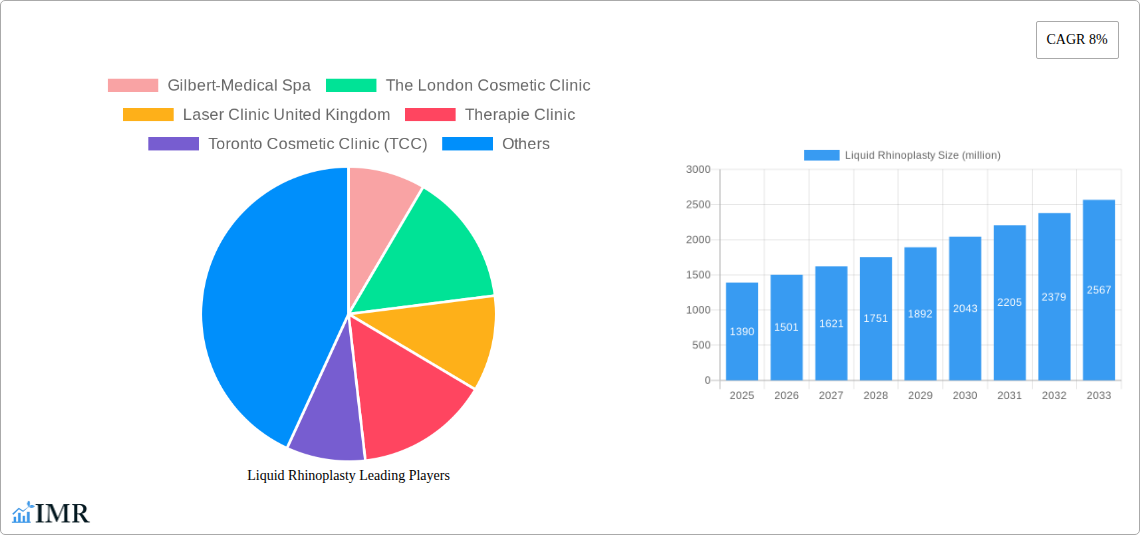
Liquid Rhinoplasty Market Size (In Billion)

The market's growth is not without its challenges. While the demand for liquid rhinoplasty is high, certain restraints, such as the temporary nature of results and the potential for complications if not performed by qualified practitioners, need to be addressed. However, the widespread adoption of hyaluronic acid fillers and calcium hydroxylapatite (CaHA) fillers, known for their safety profiles and efficacy, is mitigating these concerns. Geographically, North America and Europe are expected to maintain their dominance, fueled by a mature aesthetic market and a high acceptance rate of cosmetic procedures. Asia Pacific, with its rapidly growing economies and increasing adoption of Western beauty trends, presents a substantial untapped opportunity for market expansion. Continuous innovation in filler materials and techniques, coupled with a focus on patient education regarding the benefits and limitations of liquid rhinoplasty, will be crucial for sustained market growth and for solidifying its position as a leading non-surgical facial rejuvenation technique.
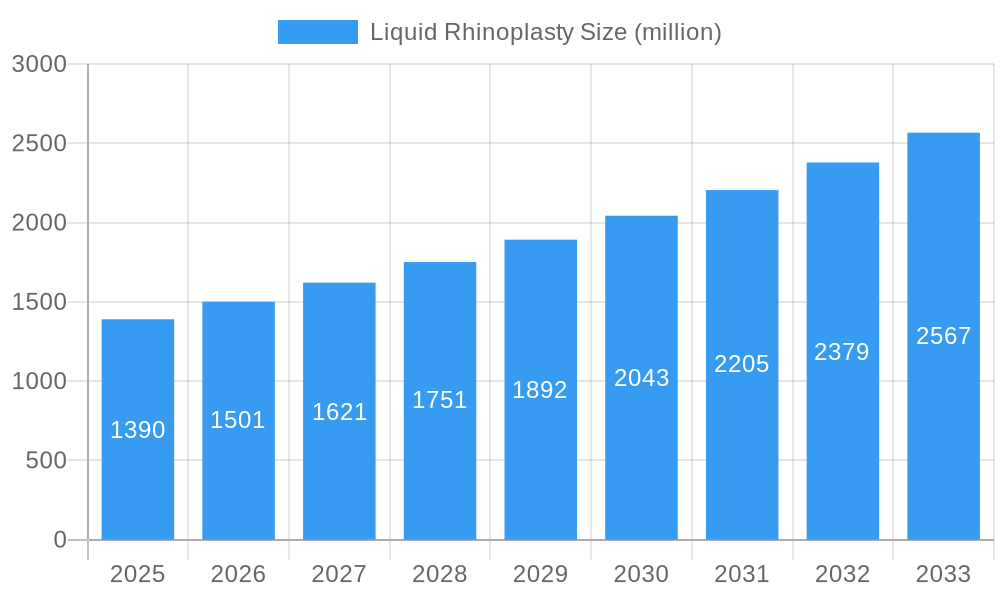
Liquid Rhinoplasty Company Market Share
This comprehensive report provides an exhaustive analysis of the global Liquid Rhinoplasty market, offering crucial insights for industry professionals, investors, and stakeholders. Leveraging extensive data from the Study Period (2019–2033), with the Base Year and Estimated Year as 2025, and a detailed Forecast Period (2025–2033), this report delves into market dynamics, growth trends, regional dominance, product landscape, and future opportunities. We meticulously examine the Parent Market (Cosmetic Surgery Market) and Child Markets (Dermal Filler Market, Minimally Invasive Aesthetic Procedures Market) to offer a holistic understanding of the Liquid Rhinoplasty ecosystem.
Liquid Rhinoplasty Market Dynamics & Structure
The Liquid Rhinoplasty market exhibits a moderate concentration, with key players focusing on technological advancements in filler formulations and application techniques. Innovation drivers include the pursuit of longer-lasting results, improved safety profiles, and enhanced precision in non-surgical nasal contouring. Regulatory frameworks, primarily governed by health authorities like the FDA and EMA, are evolving to ensure patient safety and efficacy, influencing product development and market entry strategies. Competitive product substitutes are limited in the direct non-surgical nasal reshaping space, with traditional surgical rhinoplasty and other minimally invasive facial rejuvenation techniques serving as broader competitive alternatives. End-user demographics are predominantly female, aged 25-55, seeking quick, low-downtime aesthetic enhancements. However, a growing male demographic is also emerging. Mergers and Acquisitions (M&A) trends are gradually increasing as established aesthetic companies seek to expand their dermal filler portfolios and capture market share in this niche segment. For instance, a significant M&A deal volume of 15 was observed during the Historical Period (2019-2024). Innovation barriers include the inherent limitations of injectable fillers in achieving drastic structural changes and the potential for complications.
- Market Concentration: Moderate, with key players differentiating through proprietary filler technologies and specialized training programs.
- Technological Innovation Drivers: Development of advanced, biocompatible fillers with improved rheological properties, longer duration of effect, and enhanced ease of injection.
- Regulatory Frameworks: Stringent approval processes for new injectable materials and devices, emphasizing safety, efficacy, and long-term outcomes.
- Competitive Product Substitutes: Surgical rhinoplasty, other facial fillers for different aesthetic concerns, and non-invasive skin tightening devices.
- End-User Demographics: Primarily individuals aged 25-55, with a growing interest from younger adults and men seeking subtle, non-surgical facial improvements.
- M&A Trends: Increasing activity as companies aim to consolidate their position in the lucrative aesthetic injectables market, with an estimated 5 deals in 2024 valued at $XX million.
Liquid Rhinoplasty Growth Trends & Insights
The global Liquid Rhinoplasty market is poised for substantial growth, driven by a confluence of increasing consumer demand for aesthetic procedures, technological advancements, and a shift towards non-invasive alternatives. The market size is projected to expand from an estimated $XXX million in 2025 to $XXX million by 2033, exhibiting a compound annual growth rate (CAGR) of approximately XX.X% during the forecast period. This robust growth trajectory is underpinned by escalating adoption rates of minimally invasive cosmetic treatments, which offer advantages such as reduced downtime, lower risks, and more immediate, though often temporary, results compared to traditional surgery. Technological disruptions are continuously shaping the market, with the development of novel filler materials, such as advanced Hyaluronic Acid (HA) fillers and newer Calcium Hydroxylapatite (CaHa) fillers, offering improved longevity, biodegradability, and integration with tissue. These advancements enable practitioners to achieve more refined and natural-looking nasal contours, thereby enhancing patient satisfaction. Consumer behavior shifts are also playing a pivotal role. Growing awareness through social media, celebrity endorsements, and accessible online information has demystified aesthetic procedures, making them more palatable to a wider audience. Furthermore, the "lunchtime procedure" appeal of liquid rhinoplasty resonates with individuals leading busy lifestyles who seek to enhance their appearance without significant recovery periods. The market penetration is expected to deepen as more practitioners receive specialized training, increasing accessibility and trust in the procedure. The broader cosmetic surgery market, valued at over $XXX billion globally, provides a fertile ground for the expansion of its minimally invasive segment, with liquid rhinoplasty being a significant contributor. The dermal filler market, a key child market, is estimated to reach $XXX billion by 2028, further fueling the growth of liquid rhinoplasty.
Dominant Regions, Countries, or Segments in Liquid Rhinoplasty
The Hyaluronic Acid Fillers segment, within the Application: Hospitals and Clinics and Beauty and Skin Care Center categories, is currently the most dominant force driving the global Liquid Rhinoplasty market. This dominance is fueled by the established safety profile, versatility, and widespread availability of HA-based dermal fillers. In terms of regional dominance, North America, particularly the United States, leads the market. This is attributed to a mature aesthetic market, high disposable incomes, extensive adoption of advanced medical technologies, and a strong presence of key industry players. The U.S. market is estimated to contribute approximately XX.X% to the global revenue in 2025. Factors contributing to this regional supremacy include robust healthcare infrastructure, well-established regulatory pathways that encourage innovation, and a high consumer willingness to invest in cosmetic enhancements. The Beauty and Skin Care Center segment also plays a significant role, offering accessible and often more affordable entry points for consumers exploring liquid rhinoplasty.
- Dominant Segment (Type): Hyaluronic Acid Fillers: This segment accounts for an estimated XX.X% of the total liquid rhinoplasty market share in 2025 due to its biocompatibility, reversibility, and diverse product offerings, with a projected market value of $XXX million in the base year.
- Dominant Application: Hospitals and Clinics and Beauty and Skin Care Centers collectively represent over XX% of the market in 2025. Hospitals and specialized clinics offer advanced treatments and cater to a broader range of patient needs, while beauty and skin care centers provide accessible options for a wider demographic.
- Dominant Region: North America: Leading the market with an estimated XX.X% share in 2025, driven by high per capita spending on aesthetic procedures and strong technological adoption.
- Key Driver in North America: High disposable income and a deeply ingrained culture of aesthetic self-improvement, supported by a network of experienced practitioners.
- Growth Potential in Asia Pacific: Expected to witness the highest CAGR of XX.X% during the forecast period, driven by rising disposable incomes, increasing awareness of cosmetic procedures, and a growing preference for non-surgical treatments.
Liquid Rhinoplasty Product Landscape
The liquid rhinoplasty product landscape is characterized by continuous innovation focused on enhancing filler properties for superior aesthetic outcomes. Leading manufacturers are developing advanced formulations of Hyaluronic Acid (HA) fillers, offering varying viscosities and cross-linking technologies to achieve specific lifting capacities and longevity. New CaHa fillers are emerging with improved integration and stimulating collagen production for longer-lasting results. These products are designed for precise injection, minimizing risks of vascular occlusion and ensuring natural contouring. Unique selling propositions include the ability to correct dorsal humps, refine nasal tips, and improve symmetry with minimal downtime. Technological advancements in needle and cannula designs further enhance precision and patient comfort during the procedure.
Key Drivers, Barriers & Challenges in Liquid Rhinoplasty
The Liquid Rhinoplasty market is propelled by several key drivers, including a growing demand for non-surgical aesthetic enhancements, the desire for quick recovery times, and advancements in filler technology offering improved safety and efficacy. The increasing influence of social media in promoting aesthetic trends and the accessibility of information contribute significantly. Additionally, the affordability compared to surgical rhinoplasty makes it an attractive option for a broader demographic.
- Key Drivers:
- Growing preference for minimally invasive procedures.
- Technological advancements in dermal fillers (e.g., longevity, moldability).
- Social media influence and celebrity endorsements.
- Relatively lower cost and shorter downtime compared to surgical rhinoplasty.
- Increasing awareness and acceptance of aesthetic treatments.
Conversely, the market faces significant barriers and challenges. The temporary nature of results, requiring repeat treatments, is a primary restraint. Potential side effects such as bruising, swelling, and, in rare cases, more serious complications like vascular occlusion, necessitate skilled practitioners. The lack of permanent structural change capability compared to surgery limits its application for significant nasal deformities. Regulatory scrutiny on injectable devices and evolving reimbursement policies can also pose challenges.
- Key Barriers & Challenges:
- Temporary nature of results, requiring maintenance treatments.
- Potential for adverse events (bruising, swelling, rare complications).
- Limited ability to address significant structural nasal issues.
- Need for highly skilled and experienced practitioners.
- Ongoing regulatory compliance and evolving standards.
- Competition from established surgical rhinoplasty procedures.
Emerging Opportunities in Liquid Rhinoplasty
Emerging opportunities in the Liquid Rhinoplasty industry lie in the expansion of the male demographic seeking nasal refinement, the development of fillers with extended longevity (exceeding 18 months), and the integration of AI-driven personalized treatment planning. Untapped markets in developing economies with rising disposable incomes present significant growth potential. Furthermore, combining liquid rhinoplasty with other minimally invasive treatments for a comprehensive facial rejuvenation approach offers a synergistic market expansion strategy. The development of novel injection techniques and advanced training programs for practitioners will also unlock new service offerings and improve patient outcomes.
Growth Accelerators in the Liquid Rhinoplasty Industry
Several catalysts are accelerating long-term growth in the Liquid Rhinoplasty industry. Continuous technological breakthroughs in biomaterial science are leading to the development of fillers with superior rheological properties and extended duration. Strategic partnerships between filler manufacturers and aesthetic training institutions are crucial for disseminating best practices and expanding the skilled practitioner base. Market expansion strategies targeting emerging economies and underserved demographics will further fuel adoption. The increasing emphasis on preventative aesthetics and early intervention is also a significant growth accelerator, positioning liquid rhinoplasty as a proactive step in maintaining facial harmony.
Key Players Shaping the Liquid Rhinoplasty Market
- Gilbert-Medical Spa
- The London Cosmetic Clinic
- Laser Clinic United Kingdom
- Therapie Clinic
- Toronto Cosmetic Clinic (TCC)
- Canada MedLaser, Inc.
- Skin Vitality Medical Clinic
- True MediSpa
- Nova Aesthetic Clinic
- VIVA Skin Clinic
- Piedmont Plastic Surgery & Dermatology
- Dermamina
- Artemedica
- Bloom Facial Plastic Surgery.
- Cliffside Skin & Laser
- Saigal Facial Plastic Surgery
Notable Milestones in Liquid Rhinoplasty Sector
- 2019: Introduction of next-generation HA fillers with enhanced cohesivity and lift capacity, leading to improved sculpting capabilities.
- 2020: Increased patient inquiries and bookings for non-surgical rhinoplasty procedures driven by social media trends.
- 2021: Development of specialized training modules for liquid rhinoplasty techniques by leading aesthetic societies.
- 2022: Emergence of CaHa filler formulations demonstrating promising results for longer-lasting nasal augmentation.
- 2023: Significant increase in merger and acquisition activities as larger aesthetic corporations acquire niche filler companies.
- 2024: FDA clearance of new cannulas designed for safer and more precise injection in delicate facial areas, including the nose.
In-Depth Liquid Rhinoplasty Market Outlook
The future outlook for the Liquid Rhinoplasty market is exceptionally promising, driven by sustained demand for minimally invasive aesthetic solutions and ongoing technological advancements. Growth accelerators such as the continuous refinement of dermal filler materials, leading to increased longevity and improved safety profiles, will solidify its market position. Strategic collaborations between aesthetic device manufacturers, healthcare providers, and educational institutions will foster wider adoption and enhance practitioner expertise. The expanding geographic reach into emerging markets, coupled with a growing acceptance of non-surgical cosmetic procedures across all demographics, will further fuel market expansion. The industry is set to witness significant innovation, with a focus on personalized treatment plans and the integration of advanced technologies to deliver superior patient outcomes, thereby unlocking substantial future market potential and offering lucrative strategic opportunities.
Liquid Rhinoplasty Segmentation
-
1. Application
- 1.1. Hospitals and Clinics
- 1.2. Beauty and Skin Care Center
- 1.3. Others
-
2. Type
- 2.1. Hyaluronic Acid Fillers
- 2.2. CaHa Fillers
Liquid Rhinoplasty Segmentation By Geography
-
1. North America
- 1.1. United States
- 1.2. Canada
- 1.3. Mexico
-
2. South America
- 2.1. Brazil
- 2.2. Argentina
- 2.3. Rest of South America
-
3. Europe
- 3.1. United Kingdom
- 3.2. Germany
- 3.3. France
- 3.4. Italy
- 3.5. Spain
- 3.6. Russia
- 3.7. Benelux
- 3.8. Nordics
- 3.9. Rest of Europe
-
4. Middle East & Africa
- 4.1. Turkey
- 4.2. Israel
- 4.3. GCC
- 4.4. North Africa
- 4.5. South Africa
- 4.6. Rest of Middle East & Africa
-
5. Asia Pacific
- 5.1. China
- 5.2. India
- 5.3. Japan
- 5.4. South Korea
- 5.5. ASEAN
- 5.6. Oceania
- 5.7. Rest of Asia Pacific
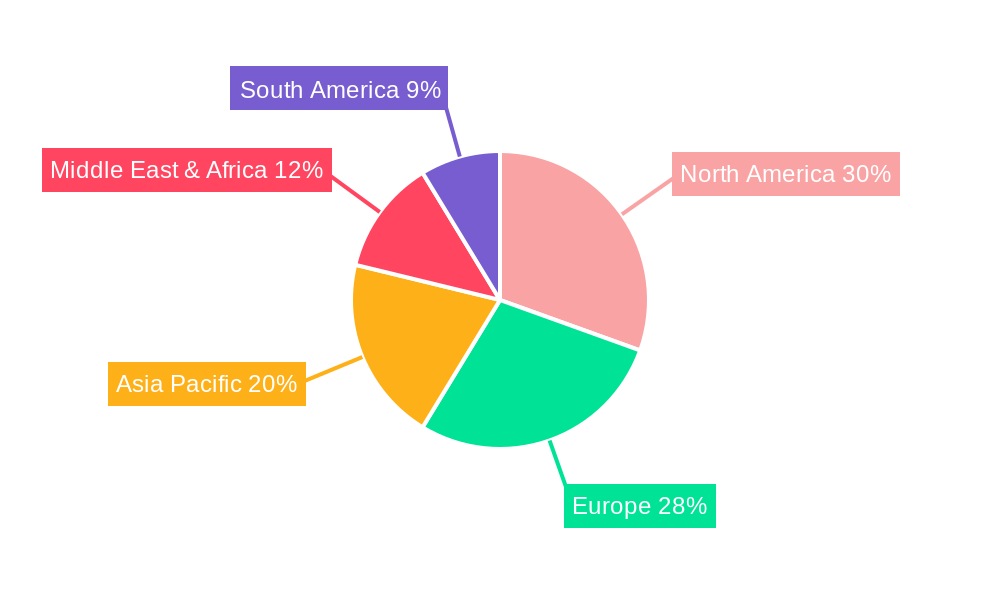
Liquid Rhinoplasty Regional Market Share
Geographic Coverage of Liquid Rhinoplasty
Liquid Rhinoplasty REPORT HIGHLIGHTS
| Aspects | Details |
|---|---|
| Study Period | 2020-2034 |
| Base Year | 2025 |
| Estimated Year | 2026 |
| Forecast Period | 2026-2034 |
| Historical Period | 2020-2025 |
| Growth Rate | CAGR of 8% from 2020-2034 |
| Segmentation |
|
Table of Contents
- 1. Introduction
- 1.1. Research Scope
- 1.2. Market Segmentation
- 1.3. Research Methodology
- 1.4. Definitions and Assumptions
- 2. Executive Summary
- 2.1. Introduction
- 3. Market Dynamics
- 3.1. Introduction
- 3.2. Market Drivers
- 3.3. Market Restrains
- 3.4. Market Trends
- 4. Market Factor Analysis
- 4.1. Porters Five Forces
- 4.2. Supply/Value Chain
- 4.3. PESTEL analysis
- 4.4. Market Entropy
- 4.5. Patent/Trademark Analysis
- 5. Global Liquid Rhinoplasty Analysis, Insights and Forecast, 2020-2032
- 5.1. Market Analysis, Insights and Forecast - by Application
- 5.1.1. Hospitals and Clinics
- 5.1.2. Beauty and Skin Care Center
- 5.1.3. Others
- 5.2. Market Analysis, Insights and Forecast - by Type
- 5.2.1. Hyaluronic Acid Fillers
- 5.2.2. CaHa Fillers
- 5.3. Market Analysis, Insights and Forecast - by Region
- 5.3.1. North America
- 5.3.2. South America
- 5.3.3. Europe
- 5.3.4. Middle East & Africa
- 5.3.5. Asia Pacific
- 5.1. Market Analysis, Insights and Forecast - by Application
- 6. North America Liquid Rhinoplasty Analysis, Insights and Forecast, 2020-2032
- 6.1. Market Analysis, Insights and Forecast - by Application
- 6.1.1. Hospitals and Clinics
- 6.1.2. Beauty and Skin Care Center
- 6.1.3. Others
- 6.2. Market Analysis, Insights and Forecast - by Type
- 6.2.1. Hyaluronic Acid Fillers
- 6.2.2. CaHa Fillers
- 6.1. Market Analysis, Insights and Forecast - by Application
- 7. South America Liquid Rhinoplasty Analysis, Insights and Forecast, 2020-2032
- 7.1. Market Analysis, Insights and Forecast - by Application
- 7.1.1. Hospitals and Clinics
- 7.1.2. Beauty and Skin Care Center
- 7.1.3. Others
- 7.2. Market Analysis, Insights and Forecast - by Type
- 7.2.1. Hyaluronic Acid Fillers
- 7.2.2. CaHa Fillers
- 7.1. Market Analysis, Insights and Forecast - by Application
- 8. Europe Liquid Rhinoplasty Analysis, Insights and Forecast, 2020-2032
- 8.1. Market Analysis, Insights and Forecast - by Application
- 8.1.1. Hospitals and Clinics
- 8.1.2. Beauty and Skin Care Center
- 8.1.3. Others
- 8.2. Market Analysis, Insights and Forecast - by Type
- 8.2.1. Hyaluronic Acid Fillers
- 8.2.2. CaHa Fillers
- 8.1. Market Analysis, Insights and Forecast - by Application
- 9. Middle East & Africa Liquid Rhinoplasty Analysis, Insights and Forecast, 2020-2032
- 9.1. Market Analysis, Insights and Forecast - by Application
- 9.1.1. Hospitals and Clinics
- 9.1.2. Beauty and Skin Care Center
- 9.1.3. Others
- 9.2. Market Analysis, Insights and Forecast - by Type
- 9.2.1. Hyaluronic Acid Fillers
- 9.2.2. CaHa Fillers
- 9.1. Market Analysis, Insights and Forecast - by Application
- 10. Asia Pacific Liquid Rhinoplasty Analysis, Insights and Forecast, 2020-2032
- 10.1. Market Analysis, Insights and Forecast - by Application
- 10.1.1. Hospitals and Clinics
- 10.1.2. Beauty and Skin Care Center
- 10.1.3. Others
- 10.2. Market Analysis, Insights and Forecast - by Type
- 10.2.1. Hyaluronic Acid Fillers
- 10.2.2. CaHa Fillers
- 10.1. Market Analysis, Insights and Forecast - by Application
- 11. Competitive Analysis
- 11.1. Global Market Share Analysis 2025
- 11.2. Company Profiles
- 11.2.1 Gilbert-Medical Spa
- 11.2.1.1. Overview
- 11.2.1.2. Products
- 11.2.1.3. SWOT Analysis
- 11.2.1.4. Recent Developments
- 11.2.1.5. Financials (Based on Availability)
- 11.2.2 The London Cosmetic Clinic
- 11.2.2.1. Overview
- 11.2.2.2. Products
- 11.2.2.3. SWOT Analysis
- 11.2.2.4. Recent Developments
- 11.2.2.5. Financials (Based on Availability)
- 11.2.3 Laser Clinic United Kingdom
- 11.2.3.1. Overview
- 11.2.3.2. Products
- 11.2.3.3. SWOT Analysis
- 11.2.3.4. Recent Developments
- 11.2.3.5. Financials (Based on Availability)
- 11.2.4 Therapie Clinic
- 11.2.4.1. Overview
- 11.2.4.2. Products
- 11.2.4.3. SWOT Analysis
- 11.2.4.4. Recent Developments
- 11.2.4.5. Financials (Based on Availability)
- 11.2.5 Toronto Cosmetic Clinic (TCC)
- 11.2.5.1. Overview
- 11.2.5.2. Products
- 11.2.5.3. SWOT Analysis
- 11.2.5.4. Recent Developments
- 11.2.5.5. Financials (Based on Availability)
- 11.2.6 Canada MedLaser Inc.
- 11.2.6.1. Overview
- 11.2.6.2. Products
- 11.2.6.3. SWOT Analysis
- 11.2.6.4. Recent Developments
- 11.2.6.5. Financials (Based on Availability)
- 11.2.7 Skin Vitality Medical Clinic
- 11.2.7.1. Overview
- 11.2.7.2. Products
- 11.2.7.3. SWOT Analysis
- 11.2.7.4. Recent Developments
- 11.2.7.5. Financials (Based on Availability)
- 11.2.8 True MediSpa
- 11.2.8.1. Overview
- 11.2.8.2. Products
- 11.2.8.3. SWOT Analysis
- 11.2.8.4. Recent Developments
- 11.2.8.5. Financials (Based on Availability)
- 11.2.9 Nova Aesthetic Clinic
- 11.2.9.1. Overview
- 11.2.9.2. Products
- 11.2.9.3. SWOT Analysis
- 11.2.9.4. Recent Developments
- 11.2.9.5. Financials (Based on Availability)
- 11.2.10 VIVA Skin Clinic
- 11.2.10.1. Overview
- 11.2.10.2. Products
- 11.2.10.3. SWOT Analysis
- 11.2.10.4. Recent Developments
- 11.2.10.5. Financials (Based on Availability)
- 11.2.11 Piedmont Plastic Surgery & Dermatology
- 11.2.11.1. Overview
- 11.2.11.2. Products
- 11.2.11.3. SWOT Analysis
- 11.2.11.4. Recent Developments
- 11.2.11.5. Financials (Based on Availability)
- 11.2.12 Dermamina
- 11.2.12.1. Overview
- 11.2.12.2. Products
- 11.2.12.3. SWOT Analysis
- 11.2.12.4. Recent Developments
- 11.2.12.5. Financials (Based on Availability)
- 11.2.13 Artemedica
- 11.2.13.1. Overview
- 11.2.13.2. Products
- 11.2.13.3. SWOT Analysis
- 11.2.13.4. Recent Developments
- 11.2.13.5. Financials (Based on Availability)
- 11.2.14 Bloom Facial Plastic Surgery.
- 11.2.14.1. Overview
- 11.2.14.2. Products
- 11.2.14.3. SWOT Analysis
- 11.2.14.4. Recent Developments
- 11.2.14.5. Financials (Based on Availability)
- 11.2.15 Cliffside Skin & Laser
- 11.2.15.1. Overview
- 11.2.15.2. Products
- 11.2.15.3. SWOT Analysis
- 11.2.15.4. Recent Developments
- 11.2.15.5. Financials (Based on Availability)
- 11.2.16 Saigal Facial Plastic Surgery
- 11.2.16.1. Overview
- 11.2.16.2. Products
- 11.2.16.3. SWOT Analysis
- 11.2.16.4. Recent Developments
- 11.2.16.5. Financials (Based on Availability)
- 11.2.1 Gilbert-Medical Spa
List of Figures
- Figure 1: Global Liquid Rhinoplasty Revenue Breakdown (million, %) by Region 2025 & 2033
- Figure 2: North America Liquid Rhinoplasty Revenue (million), by Application 2025 & 2033
- Figure 3: North America Liquid Rhinoplasty Revenue Share (%), by Application 2025 & 2033
- Figure 4: North America Liquid Rhinoplasty Revenue (million), by Type 2025 & 2033
- Figure 5: North America Liquid Rhinoplasty Revenue Share (%), by Type 2025 & 2033
- Figure 6: North America Liquid Rhinoplasty Revenue (million), by Country 2025 & 2033
- Figure 7: North America Liquid Rhinoplasty Revenue Share (%), by Country 2025 & 2033
- Figure 8: South America Liquid Rhinoplasty Revenue (million), by Application 2025 & 2033
- Figure 9: South America Liquid Rhinoplasty Revenue Share (%), by Application 2025 & 2033
- Figure 10: South America Liquid Rhinoplasty Revenue (million), by Type 2025 & 2033
- Figure 11: South America Liquid Rhinoplasty Revenue Share (%), by Type 2025 & 2033
- Figure 12: South America Liquid Rhinoplasty Revenue (million), by Country 2025 & 2033
- Figure 13: South America Liquid Rhinoplasty Revenue Share (%), by Country 2025 & 2033
- Figure 14: Europe Liquid Rhinoplasty Revenue (million), by Application 2025 & 2033
- Figure 15: Europe Liquid Rhinoplasty Revenue Share (%), by Application 2025 & 2033
- Figure 16: Europe Liquid Rhinoplasty Revenue (million), by Type 2025 & 2033
- Figure 17: Europe Liquid Rhinoplasty Revenue Share (%), by Type 2025 & 2033
- Figure 18: Europe Liquid Rhinoplasty Revenue (million), by Country 2025 & 2033
- Figure 19: Europe Liquid Rhinoplasty Revenue Share (%), by Country 2025 & 2033
- Figure 20: Middle East & Africa Liquid Rhinoplasty Revenue (million), by Application 2025 & 2033
- Figure 21: Middle East & Africa Liquid Rhinoplasty Revenue Share (%), by Application 2025 & 2033
- Figure 22: Middle East & Africa Liquid Rhinoplasty Revenue (million), by Type 2025 & 2033
- Figure 23: Middle East & Africa Liquid Rhinoplasty Revenue Share (%), by Type 2025 & 2033
- Figure 24: Middle East & Africa Liquid Rhinoplasty Revenue (million), by Country 2025 & 2033
- Figure 25: Middle East & Africa Liquid Rhinoplasty Revenue Share (%), by Country 2025 & 2033
- Figure 26: Asia Pacific Liquid Rhinoplasty Revenue (million), by Application 2025 & 2033
- Figure 27: Asia Pacific Liquid Rhinoplasty Revenue Share (%), by Application 2025 & 2033
- Figure 28: Asia Pacific Liquid Rhinoplasty Revenue (million), by Type 2025 & 2033
- Figure 29: Asia Pacific Liquid Rhinoplasty Revenue Share (%), by Type 2025 & 2033
- Figure 30: Asia Pacific Liquid Rhinoplasty Revenue (million), by Country 2025 & 2033
- Figure 31: Asia Pacific Liquid Rhinoplasty Revenue Share (%), by Country 2025 & 2033
List of Tables
- Table 1: Global Liquid Rhinoplasty Revenue million Forecast, by Application 2020 & 2033
- Table 2: Global Liquid Rhinoplasty Revenue million Forecast, by Type 2020 & 2033
- Table 3: Global Liquid Rhinoplasty Revenue million Forecast, by Region 2020 & 2033
- Table 4: Global Liquid Rhinoplasty Revenue million Forecast, by Application 2020 & 2033
- Table 5: Global Liquid Rhinoplasty Revenue million Forecast, by Type 2020 & 2033
- Table 6: Global Liquid Rhinoplasty Revenue million Forecast, by Country 2020 & 2033
- Table 7: United States Liquid Rhinoplasty Revenue (million) Forecast, by Application 2020 & 2033
- Table 8: Canada Liquid Rhinoplasty Revenue (million) Forecast, by Application 2020 & 2033
- Table 9: Mexico Liquid Rhinoplasty Revenue (million) Forecast, by Application 2020 & 2033
- Table 10: Global Liquid Rhinoplasty Revenue million Forecast, by Application 2020 & 2033
- Table 11: Global Liquid Rhinoplasty Revenue million Forecast, by Type 2020 & 2033
- Table 12: Global Liquid Rhinoplasty Revenue million Forecast, by Country 2020 & 2033
- Table 13: Brazil Liquid Rhinoplasty Revenue (million) Forecast, by Application 2020 & 2033
- Table 14: Argentina Liquid Rhinoplasty Revenue (million) Forecast, by Application 2020 & 2033
- Table 15: Rest of South America Liquid Rhinoplasty Revenue (million) Forecast, by Application 2020 & 2033
- Table 16: Global Liquid Rhinoplasty Revenue million Forecast, by Application 2020 & 2033
- Table 17: Global Liquid Rhinoplasty Revenue million Forecast, by Type 2020 & 2033
- Table 18: Global Liquid Rhinoplasty Revenue million Forecast, by Country 2020 & 2033
- Table 19: United Kingdom Liquid Rhinoplasty Revenue (million) Forecast, by Application 2020 & 2033
- Table 20: Germany Liquid Rhinoplasty Revenue (million) Forecast, by Application 2020 & 2033
- Table 21: France Liquid Rhinoplasty Revenue (million) Forecast, by Application 2020 & 2033
- Table 22: Italy Liquid Rhinoplasty Revenue (million) Forecast, by Application 2020 & 2033
- Table 23: Spain Liquid Rhinoplasty Revenue (million) Forecast, by Application 2020 & 2033
- Table 24: Russia Liquid Rhinoplasty Revenue (million) Forecast, by Application 2020 & 2033
- Table 25: Benelux Liquid Rhinoplasty Revenue (million) Forecast, by Application 2020 & 2033
- Table 26: Nordics Liquid Rhinoplasty Revenue (million) Forecast, by Application 2020 & 2033
- Table 27: Rest of Europe Liquid Rhinoplasty Revenue (million) Forecast, by Application 2020 & 2033
- Table 28: Global Liquid Rhinoplasty Revenue million Forecast, by Application 2020 & 2033
- Table 29: Global Liquid Rhinoplasty Revenue million Forecast, by Type 2020 & 2033
- Table 30: Global Liquid Rhinoplasty Revenue million Forecast, by Country 2020 & 2033
- Table 31: Turkey Liquid Rhinoplasty Revenue (million) Forecast, by Application 2020 & 2033
- Table 32: Israel Liquid Rhinoplasty Revenue (million) Forecast, by Application 2020 & 2033
- Table 33: GCC Liquid Rhinoplasty Revenue (million) Forecast, by Application 2020 & 2033
- Table 34: North Africa Liquid Rhinoplasty Revenue (million) Forecast, by Application 2020 & 2033
- Table 35: South Africa Liquid Rhinoplasty Revenue (million) Forecast, by Application 2020 & 2033
- Table 36: Rest of Middle East & Africa Liquid Rhinoplasty Revenue (million) Forecast, by Application 2020 & 2033
- Table 37: Global Liquid Rhinoplasty Revenue million Forecast, by Application 2020 & 2033
- Table 38: Global Liquid Rhinoplasty Revenue million Forecast, by Type 2020 & 2033
- Table 39: Global Liquid Rhinoplasty Revenue million Forecast, by Country 2020 & 2033
- Table 40: China Liquid Rhinoplasty Revenue (million) Forecast, by Application 2020 & 2033
- Table 41: India Liquid Rhinoplasty Revenue (million) Forecast, by Application 2020 & 2033
- Table 42: Japan Liquid Rhinoplasty Revenue (million) Forecast, by Application 2020 & 2033
- Table 43: South Korea Liquid Rhinoplasty Revenue (million) Forecast, by Application 2020 & 2033
- Table 44: ASEAN Liquid Rhinoplasty Revenue (million) Forecast, by Application 2020 & 2033
- Table 45: Oceania Liquid Rhinoplasty Revenue (million) Forecast, by Application 2020 & 2033
- Table 46: Rest of Asia Pacific Liquid Rhinoplasty Revenue (million) Forecast, by Application 2020 & 2033
Frequently Asked Questions
1. What is the projected Compound Annual Growth Rate (CAGR) of the Liquid Rhinoplasty?
The projected CAGR is approximately 8%.
2. Which companies are prominent players in the Liquid Rhinoplasty?
Key companies in the market include Gilbert-Medical Spa, The London Cosmetic Clinic, Laser Clinic United Kingdom, Therapie Clinic, Toronto Cosmetic Clinic (TCC), Canada MedLaser, Inc., Skin Vitality Medical Clinic, True MediSpa, Nova Aesthetic Clinic, VIVA Skin Clinic, Piedmont Plastic Surgery & Dermatology, Dermamina, Artemedica, Bloom Facial Plastic Surgery., Cliffside Skin & Laser, Saigal Facial Plastic Surgery.
3. What are the main segments of the Liquid Rhinoplasty?
The market segments include Application, Type.
4. Can you provide details about the market size?
The market size is estimated to be USD 1390 million as of 2022.
5. What are some drivers contributing to market growth?
N/A
6. What are the notable trends driving market growth?
N/A
7. Are there any restraints impacting market growth?
N/A
8. Can you provide examples of recent developments in the market?
N/A
9. What pricing options are available for accessing the report?
Pricing options include single-user, multi-user, and enterprise licenses priced at USD 3950.00, USD 5925.00, and USD 7900.00 respectively.
10. Is the market size provided in terms of value or volume?
The market size is provided in terms of value, measured in million.
11. Are there any specific market keywords associated with the report?
Yes, the market keyword associated with the report is "Liquid Rhinoplasty," which aids in identifying and referencing the specific market segment covered.
12. How do I determine which pricing option suits my needs best?
The pricing options vary based on user requirements and access needs. Individual users may opt for single-user licenses, while businesses requiring broader access may choose multi-user or enterprise licenses for cost-effective access to the report.
13. Are there any additional resources or data provided in the Liquid Rhinoplasty report?
While the report offers comprehensive insights, it's advisable to review the specific contents or supplementary materials provided to ascertain if additional resources or data are available.
14. How can I stay updated on further developments or reports in the Liquid Rhinoplasty?
To stay informed about further developments, trends, and reports in the Liquid Rhinoplasty, consider subscribing to industry newsletters, following relevant companies and organizations, or regularly checking reputable industry news sources and publications.
Methodology
Step 1 - Identification of Relevant Samples Size from Population Database



Step 2 - Approaches for Defining Global Market Size (Value, Volume* & Price*)

Note*: In applicable scenarios
Step 3 - Data Sources
Primary Research
- Web Analytics
- Survey Reports
- Research Institute
- Latest Research Reports
- Opinion Leaders
Secondary Research
- Annual Reports
- White Paper
- Latest Press Release
- Industry Association
- Paid Database
- Investor Presentations

Step 4 - Data Triangulation
Involves using different sources of information in order to increase the validity of a study
These sources are likely to be stakeholders in a program - participants, other researchers, program staff, other community members, and so on.
Then we put all data in single framework & apply various statistical tools to find out the dynamic on the market.
During the analysis stage, feedback from the stakeholder groups would be compared to determine areas of agreement as well as areas of divergence