


Key Insights
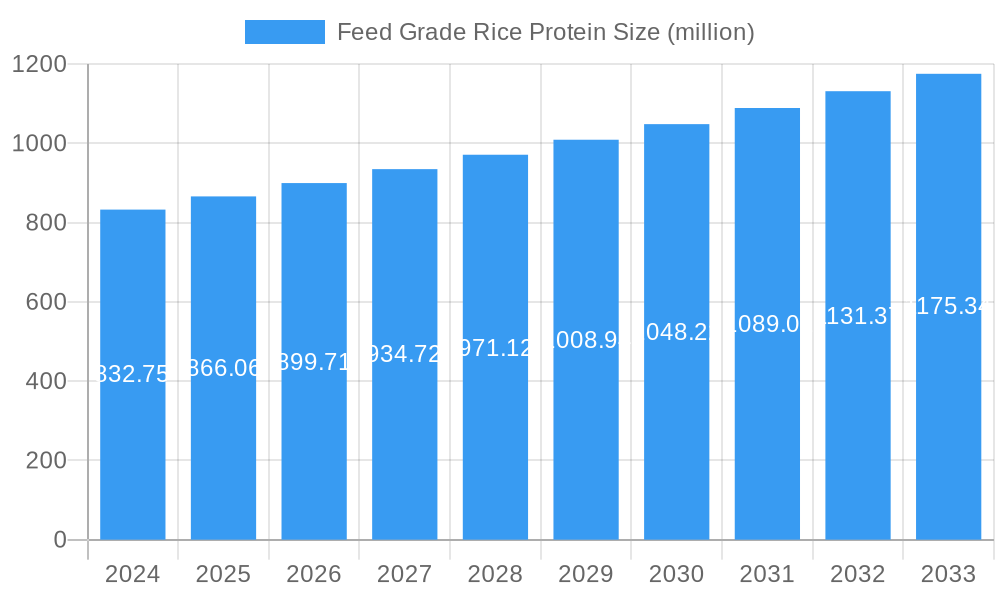
The global Feed Grade Rice Protein market is poised for robust expansion, estimated to be valued at $832.75 million in 2024. This growth is driven by several critical factors, including the increasing demand for sustainable and high-quality protein sources in animal feed formulations. As global meat consumption continues to rise, so does the need for efficient and nutritious animal feed. Feed grade rice protein, derived from rice, offers a hypoallergenic and easily digestible alternative to traditional protein sources like soy and animal-based meals. This is particularly important for livestock and aquaculture, where digestive health and allergenicity are significant concerns. Furthermore, the growing awareness among feed manufacturers and farmers about the benefits of plant-based proteins for animal well-being and environmental sustainability is fueling market penetration. Innovations in processing technologies that enhance protein extraction and purity are also contributing to the market's upward trajectory, making it a more attractive ingredient for feed producers. The market is projected to witness a CAGR of 4% from 2025 to 2033, indicating a steady and significant increase in its value.
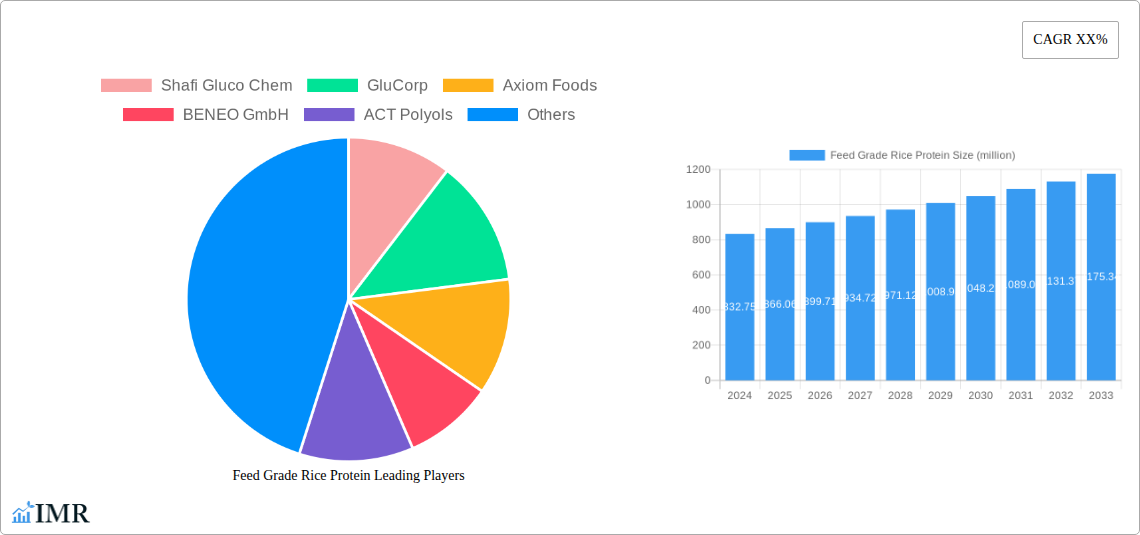
Feed Grade Rice Protein Market Size (In Million)

The market segmentation reveals key areas of opportunity. The "Animal Feed" application segment is expected to dominate, reflecting the core use of feed grade rice protein. Within this, the increasing preference for protein content around 60% and 65% highlights the demand for specific nutritional profiles tailored to different animal species and life stages. The "Animal Supplements" and "Animal Antibiotics" segments also present lucrative avenues, as rice protein's digestibility and nutritional completeness make it suitable for specialized animal health products. Geographically, Asia Pacific, led by China and India, is anticipated to be a significant market due to its large animal population and expanding agricultural sector. North America and Europe also represent substantial markets, driven by advanced animal husbandry practices and a strong focus on animal welfare and feed efficiency. The presence of key players like Shafi Gluco Chem, GluCorp, and BENEO GmbH signifies a competitive landscape, with companies focusing on product development, capacity expansion, and strategic partnerships to capture market share. The market's expansion is also supported by a growing understanding of the nutritional benefits of rice protein for various animal types.
Feed Grade Rice Protein Company Market Share
Feed Grade Rice Protein Market: Comprehensive Report Description
This in-depth market research report offers a detailed analysis of the Feed Grade Rice Protein market, providing critical insights for industry stakeholders across the global animal feed ingredients, animal nutrition, and sustainable protein sourcing sectors. Covering a study period from 2019 to 2033, with a base and estimated year of 2025 and a forecast period from 2025 to 2033, this report delves into the market dynamics, growth trends, regional dominance, product landscape, and key players shaping the future of rice protein for animal feed. We meticulously analyze both parent market (Animal Feed Ingredients) and child market (Feed Grade Rice Protein) dynamics to offer a holistic view of opportunities and challenges.
High-traffic keywords integrated: Feed Grade Rice Protein, Rice Protein for Animal Feed, Animal Feed Ingredients, Animal Nutrition, Sustainable Protein, Plant-Based Protein, Rice Protein Concentrate, Rice Protein Isolate, Animal Feed Additives, Livestock Feed, Aquaculture Feed, Pet Food Ingredients, Gluten-Free Protein, Non-GMO Protein, Asia Pacific Feed Market, North America Feed Market, Europe Feed Market, Feed Grade Protein Market, Animal Feed Supplements, Animal Feed Antibiotics, Protein Content 60%, Protein Content 65%.
Feed Grade Rice Protein Market Dynamics & Structure
The Feed Grade Rice Protein market is characterized by a moderately concentrated structure, with key players increasingly focusing on technological innovation to enhance protein extraction efficiency and purity. Drivers for innovation include the growing demand for sustainable and plant-based protein alternatives in animal nutrition, the need for gluten-free and hypoallergenic ingredients, and advancements in processing technologies that improve digestibility and bioavailability. Regulatory frameworks, particularly those related to food safety, animal health, and the use of novel ingredients, play a crucial role in market entry and product development. Competitive product substitutes include other plant-based proteins like soy, pea, and corn protein, as well as animal-derived proteins. End-user demographics are evolving, with a growing preference for ethically sourced and environmentally friendly ingredients in livestock and aquaculture feed. Mergers and acquisitions (M&A) are an emerging trend, as companies seek to expand their product portfolios and gain market share.
- Market Concentration: Moderately concentrated with a few key players dominating, but opportunities exist for niche product developers.
- Technological Innovation Drivers: Increased demand for sustainable protein, improved extraction methods, and enhanced nutritional profiles for animals.
- Regulatory Frameworks: Stringent regulations regarding feed safety, ingredient sourcing, and labeling impact product development and market access.
- Competitive Product Substitutes: Soy protein, pea protein, corn protein, and animal-derived proteins.
- End-User Demographics: Growing preference for sustainable, hypoallergenic, and traceable animal feed ingredients.
- M&A Trends: Companies are actively seeking strategic acquisitions to broaden their product offerings and geographical reach.
Feed Grade Rice Protein Growth Trends & Insights
The Feed Grade Rice Protein market is projected to witness significant growth, driven by a confluence of factors including increasing global meat consumption, a rising awareness of the environmental impact of traditional protein sources, and advancements in agricultural practices that support the cultivation of rice as a viable protein source. The market size evolution is anticipated to be robust, with a projected Compound Annual Growth Rate (CAGR) that reflects the accelerating adoption of plant-based protein ingredients in animal diets. This adoption rate is further bolstered by the inherent benefits of rice protein, such as its hypoallergenic properties, making it an ideal choice for animals with sensitivities and a valuable component in animal feed supplements. Technological disruptions in protein extraction and refinement are enhancing the quality and cost-effectiveness of feed-grade rice protein, making it increasingly competitive. Consumer behavior shifts, particularly the demand for ethically produced and transparently sourced food products that extend to the animal feed supply chain, are also contributing to the growth trajectory. The market penetration of feed-grade rice protein is expected to expand from livestock and aquaculture to encompass a larger share of the pet food ingredients market.
- Market Size Evolution: Sustained upward trend driven by increasing demand for sustainable and high-quality animal feed.
- Adoption Rates: Accelerating adoption across various animal species due to its nutritional benefits and allergen-free profile.
- Technological Disruptions: Innovations in extraction and purification are improving product quality and reducing production costs.
- Consumer Behavior Shifts: Growing demand for sustainable, traceable, and ethically produced animal feed ingredients.
- Market Penetration: Expanding beyond traditional livestock to aquaculture and pet food applications.
Dominant Regions, Countries, or Segments in Feed Grade Rice Protein
The Animal Feed segment, within the application category, is unequivocally the dominant force driving the growth of the Feed Grade Rice Protein market. This dominance is rooted in the sheer scale of the global animal feed industry, which constantly seeks innovative and sustainable protein ingredients to meet the nutritional demands of a growing global population. The Asia Pacific region, particularly countries like China, India, and Southeast Asian nations, stands out as the leading region due to its substantial livestock and aquaculture production, coupled with a rapidly expanding economy that fuels increased demand for animal protein. Economic policies in these nations often favor the development of domestic agricultural industries and the adoption of advanced feed technologies. Infrastructure development, including improved logistics and processing facilities, further supports the growth of the rice protein market in this region.
Within the Types segment, Protein Content 65% rice protein is gaining significant traction due to its higher protein density, offering greater nutritional value per unit of ingredient. This is crucial for feed formulators aiming to optimize feed efficiency and reduce reliance on lower-protein alternatives. The market share for this type is steadily increasing as processing technologies mature.
Key drivers for dominance in the Animal Feed segment include:
- Large-scale Livestock and Aquaculture Production: The immense demand for animal protein globally necessitates high-volume feed solutions.
- Growing Demand for Sustainable Ingredients: Rice protein offers a more environmentally friendly alternative to traditional protein sources like soy.
- Hypoallergenic Properties: Crucial for feed formulations targeting animals with dietary sensitivities, reducing the incidence of allergies and improving animal health.
- Technological Advancements in Feed Formulation: Enables better integration and utilization of rice protein in diverse feed types.
Dominant factors in the Asia Pacific region include:
- Established Agricultural Base: Significant production of rice, providing a readily available raw material.
- Government Support and Initiatives: Policies promoting agricultural innovation and the development of value-added agricultural products.
- Rising Middle Class and Increased Protein Consumption: Driving demand for meat, poultry, and fish products, thus boosting the feed industry.
- Investment in Feed Technology: Companies are investing heavily in R&D to improve feed formulations and production efficiency.
Feed Grade Rice Protein Product Landscape
The Feed Grade Rice Protein product landscape is evolving with a focus on enhancing protein purity, optimizing amino acid profiles, and improving digestibility for various animal species. Innovations are geared towards creating rice protein concentrates (RPC) and rice protein isolates (RPI) with higher protein percentages, catering to specific nutritional requirements in animal feed. Applications span across crucial sectors like animal feed, where it serves as a primary protein source, and animal supplements, providing targeted nutritional support. Manufacturers are emphasizing non-GMO and gluten-free product offerings, appealing to a growing demand for cleaner labels in the animal nutrition industry. Performance metrics are increasingly being scrutinized, with a focus on factors like true protein digestibility, essential amino acid content, and palatability.
Key Drivers, Barriers & Challenges in Feed Grade Rice Protein
Key Drivers:
The Feed Grade Rice Protein market is propelled by several key drivers. The escalating global demand for sustainable and plant-based protein sources in animal nutrition is a primary catalyst, driven by environmental concerns and consumer preferences. Technological advancements in protein extraction and purification are making rice protein more cost-effective and of higher quality, enhancing its competitiveness. Furthermore, the growing awareness of the hypoallergenic and digestive benefits of rice protein positions it as a preferred ingredient for animals with sensitivities, leading to increased adoption in specialized feed formulations.
Barriers & Challenges:
Despite the positive outlook, the market faces significant barriers and challenges. The relatively higher cost of production compared to some established protein sources, such as soy protein, can hinder widespread adoption, especially in price-sensitive markets. Fluctuations in the availability and price of raw rice can impact supply chain stability and cost management. Regulatory hurdles related to ingredient approval and labeling in different regions can also pose challenges for market entry and expansion. Intense competition from other plant-based protein alternatives and established feed ingredients puts pressure on market share and pricing strategies.
Emerging Opportunities in Feed Grade Rice Protein
Emerging opportunities in the Feed Grade Rice Protein market lie in the untapped potential of niche applications and the increasing demand for specialized nutritional solutions. The aquaculture sector presents a significant growth avenue, as sustainable protein sources are crucial for its expansion. Furthermore, the development of highly digestible rice protein isolates tailored for young animals and sensitive species offers a unique market proposition. Exploring innovative processing techniques to further enhance the functional properties of rice protein, such as emulsification and water-binding capabilities, can unlock new applications in compound feed formulations. The growing trend towards circular economy principles also presents an opportunity for rice protein derived from by-products of rice processing, aligning with sustainability goals.
Growth Accelerators in the Feed Grade Rice Protein Industry
Long-term growth in the Feed Grade Rice Protein industry is being significantly accelerated by technological breakthroughs in sustainable protein extraction and advanced processing techniques. These advancements are leading to higher yields, improved purity, and reduced production costs, making rice protein a more economically viable option for feed manufacturers. Strategic partnerships between rice producers, protein processors, and animal feed companies are also crucial growth accelerators, fostering collaboration in R&D, supply chain optimization, and market penetration strategies. Furthermore, the increasing focus on animal welfare and health is driving the demand for high-quality, digestible, and hypoallergenic protein ingredients, which feed-grade rice protein effectively addresses, thereby accelerating its market expansion.
Key Players Shaping the Feed Grade Rice Protein Market
- Shafi Gluco Chem
- GluCorp
- Axiom Foods
- BENEO GmbH
- ACT Polyols
- Anhui Yuansen Biotechnology
- Wuhu Deli Foods
- Master Sweetener
- Wudi Deda Agriculture
- Pioneer Industries Private Limited
Notable Milestones in Feed Grade Rice Protein Sector
- 2019: Increased investment in R&D for novel protein extraction technologies, leading to improved product quality.
- 2020: Growing demand for hypoallergenic ingredients in animal feed due to rising instances of food sensitivities.
- 2021: Expansion of aquaculture feed applications for rice protein, driven by sustainability concerns.
- 2022: Several companies introduced new grades of rice protein with enhanced protein content (e.g., 65%).
- 2023: Strategic partnerships formed between agricultural cooperatives and protein processors to secure raw material supply.
- 2024: Increased focus on non-GMO and organic certifications for feed-grade rice protein products.
In-Depth Feed Grade Rice Protein Market Outlook
The Feed Grade Rice Protein market is poised for sustained growth, driven by the undeniable momentum towards sustainable and functional animal nutrition. Key growth accelerators include ongoing advancements in biotechnology for protein refinement, leading to enhanced bioavailability and a broader spectrum of amino acid profiles. Strategic alliances between global feed manufacturers and specialized rice protein producers are expected to streamline supply chains and foster innovation in product development. The increasing emphasis on animal health and well-being, coupled with a growing consumer preference for transparency in food production, will continue to fuel the demand for hypoallergenic and plant-based protein alternatives like rice protein. Future market potential lies in further penetration into developing economies and the exploration of novel applications in specialized animal diets.
Feed Grade Rice Protein Segmentation
-
1. Application
- 1.1. Animal Feed
- 1.2. Animal Supplements
- 1.3. Animal Antibiotics
- 1.4. Other
-
2. Types
- 2.1. Protein Content 60%
- 2.2. Protein Content 65%
- 2.3. Other
Feed Grade Rice Protein Segmentation By Geography
-
1. North America
- 1.1. United States
- 1.2. Canada
- 1.3. Mexico
-
2. South America
- 2.1. Brazil
- 2.2. Argentina
- 2.3. Rest of South America
-
3. Europe
- 3.1. United Kingdom
- 3.2. Germany
- 3.3. France
- 3.4. Italy
- 3.5. Spain
- 3.6. Russia
- 3.7. Benelux
- 3.8. Nordics
- 3.9. Rest of Europe
-
4. Middle East & Africa
- 4.1. Turkey
- 4.2. Israel
- 4.3. GCC
- 4.4. North Africa
- 4.5. South Africa
- 4.6. Rest of Middle East & Africa
-
5. Asia Pacific
- 5.1. China
- 5.2. India
- 5.3. Japan
- 5.4. South Korea
- 5.5. ASEAN
- 5.6. Oceania
- 5.7. Rest of Asia Pacific
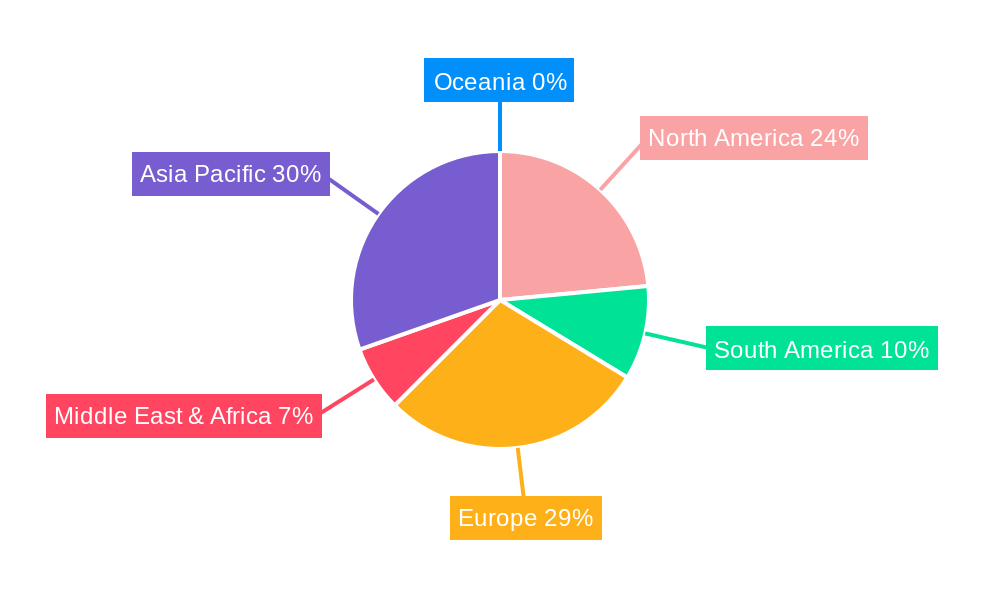
Feed Grade Rice Protein Regional Market Share
Geographic Coverage of Feed Grade Rice Protein
Feed Grade Rice Protein REPORT HIGHLIGHTS
| Aspects | Details |
|---|---|
| Study Period | 2020-2034 |
| Base Year | 2025 |
| Estimated Year | 2026 |
| Forecast Period | 2026-2034 |
| Historical Period | 2020-2025 |
| Growth Rate | CAGR of 4% from 2020-2034 |
| Segmentation |
|
Table of Contents
- 1. Introduction
- 1.1. Research Scope
- 1.2. Market Segmentation
- 1.3. Research Methodology
- 1.4. Definitions and Assumptions
- 2. Executive Summary
- 2.1. Introduction
- 3. Market Dynamics
- 3.1. Introduction
- 3.2. Market Drivers
- 3.3. Market Restrains
- 3.4. Market Trends
- 4. Market Factor Analysis
- 4.1. Porters Five Forces
- 4.2. Supply/Value Chain
- 4.3. PESTEL analysis
- 4.4. Market Entropy
- 4.5. Patent/Trademark Analysis
- 5. Global Feed Grade Rice Protein Analysis, Insights and Forecast, 2020-2032
- 5.1. Market Analysis, Insights and Forecast - by Application
- 5.1.1. Animal Feed
- 5.1.2. Animal Supplements
- 5.1.3. Animal Antibiotics
- 5.1.4. Other
- 5.2. Market Analysis, Insights and Forecast - by Types
- 5.2.1. Protein Content 60%
- 5.2.2. Protein Content 65%
- 5.2.3. Other
- 5.3. Market Analysis, Insights and Forecast - by Region
- 5.3.1. North America
- 5.3.2. South America
- 5.3.3. Europe
- 5.3.4. Middle East & Africa
- 5.3.5. Asia Pacific
- 5.1. Market Analysis, Insights and Forecast - by Application
- 6. North America Feed Grade Rice Protein Analysis, Insights and Forecast, 2020-2032
- 6.1. Market Analysis, Insights and Forecast - by Application
- 6.1.1. Animal Feed
- 6.1.2. Animal Supplements
- 6.1.3. Animal Antibiotics
- 6.1.4. Other
- 6.2. Market Analysis, Insights and Forecast - by Types
- 6.2.1. Protein Content 60%
- 6.2.2. Protein Content 65%
- 6.2.3. Other
- 6.1. Market Analysis, Insights and Forecast - by Application
- 7. South America Feed Grade Rice Protein Analysis, Insights and Forecast, 2020-2032
- 7.1. Market Analysis, Insights and Forecast - by Application
- 7.1.1. Animal Feed
- 7.1.2. Animal Supplements
- 7.1.3. Animal Antibiotics
- 7.1.4. Other
- 7.2. Market Analysis, Insights and Forecast - by Types
- 7.2.1. Protein Content 60%
- 7.2.2. Protein Content 65%
- 7.2.3. Other
- 7.1. Market Analysis, Insights and Forecast - by Application
- 8. Europe Feed Grade Rice Protein Analysis, Insights and Forecast, 2020-2032
- 8.1. Market Analysis, Insights and Forecast - by Application
- 8.1.1. Animal Feed
- 8.1.2. Animal Supplements
- 8.1.3. Animal Antibiotics
- 8.1.4. Other
- 8.2. Market Analysis, Insights and Forecast - by Types
- 8.2.1. Protein Content 60%
- 8.2.2. Protein Content 65%
- 8.2.3. Other
- 8.1. Market Analysis, Insights and Forecast - by Application
- 9. Middle East & Africa Feed Grade Rice Protein Analysis, Insights and Forecast, 2020-2032
- 9.1. Market Analysis, Insights and Forecast - by Application
- 9.1.1. Animal Feed
- 9.1.2. Animal Supplements
- 9.1.3. Animal Antibiotics
- 9.1.4. Other
- 9.2. Market Analysis, Insights and Forecast - by Types
- 9.2.1. Protein Content 60%
- 9.2.2. Protein Content 65%
- 9.2.3. Other
- 9.1. Market Analysis, Insights and Forecast - by Application
- 10. Asia Pacific Feed Grade Rice Protein Analysis, Insights and Forecast, 2020-2032
- 10.1. Market Analysis, Insights and Forecast - by Application
- 10.1.1. Animal Feed
- 10.1.2. Animal Supplements
- 10.1.3. Animal Antibiotics
- 10.1.4. Other
- 10.2. Market Analysis, Insights and Forecast - by Types
- 10.2.1. Protein Content 60%
- 10.2.2. Protein Content 65%
- 10.2.3. Other
- 10.1. Market Analysis, Insights and Forecast - by Application
- 11. Competitive Analysis
- 11.1. Global Market Share Analysis 2025
- 11.2. Company Profiles
- 11.2.1 Shafi Gluco Chem
- 11.2.1.1. Overview
- 11.2.1.2. Products
- 11.2.1.3. SWOT Analysis
- 11.2.1.4. Recent Developments
- 11.2.1.5. Financials (Based on Availability)
- 11.2.2 GluCorp
- 11.2.2.1. Overview
- 11.2.2.2. Products
- 11.2.2.3. SWOT Analysis
- 11.2.2.4. Recent Developments
- 11.2.2.5. Financials (Based on Availability)
- 11.2.3 Axiom Foods
- 11.2.3.1. Overview
- 11.2.3.2. Products
- 11.2.3.3. SWOT Analysis
- 11.2.3.4. Recent Developments
- 11.2.3.5. Financials (Based on Availability)
- 11.2.4 BENEO GmbH
- 11.2.4.1. Overview
- 11.2.4.2. Products
- 11.2.4.3. SWOT Analysis
- 11.2.4.4. Recent Developments
- 11.2.4.5. Financials (Based on Availability)
- 11.2.5 ACT Polyols
- 11.2.5.1. Overview
- 11.2.5.2. Products
- 11.2.5.3. SWOT Analysis
- 11.2.5.4. Recent Developments
- 11.2.5.5. Financials (Based on Availability)
- 11.2.6 Anhui Yuansen Biotechnology
- 11.2.6.1. Overview
- 11.2.6.2. Products
- 11.2.6.3. SWOT Analysis
- 11.2.6.4. Recent Developments
- 11.2.6.5. Financials (Based on Availability)
- 11.2.7 Wuhu Deli Foods
- 11.2.7.1. Overview
- 11.2.7.2. Products
- 11.2.7.3. SWOT Analysis
- 11.2.7.4. Recent Developments
- 11.2.7.5. Financials (Based on Availability)
- 11.2.8 Master Sweetener
- 11.2.8.1. Overview
- 11.2.8.2. Products
- 11.2.8.3. SWOT Analysis
- 11.2.8.4. Recent Developments
- 11.2.8.5. Financials (Based on Availability)
- 11.2.9 Wudi Deda Agriculture
- 11.2.9.1. Overview
- 11.2.9.2. Products
- 11.2.9.3. SWOT Analysis
- 11.2.9.4. Recent Developments
- 11.2.9.5. Financials (Based on Availability)
- 11.2.10 Pioneer Industries Private Limited
- 11.2.10.1. Overview
- 11.2.10.2. Products
- 11.2.10.3. SWOT Analysis
- 11.2.10.4. Recent Developments
- 11.2.10.5. Financials (Based on Availability)
- 11.2.1 Shafi Gluco Chem
List of Figures
- Figure 1: Global Feed Grade Rice Protein Revenue Breakdown (undefined, %) by Region 2025 & 2033
- Figure 2: North America Feed Grade Rice Protein Revenue (undefined), by Application 2025 & 2033
- Figure 3: North America Feed Grade Rice Protein Revenue Share (%), by Application 2025 & 2033
- Figure 4: North America Feed Grade Rice Protein Revenue (undefined), by Types 2025 & 2033
- Figure 5: North America Feed Grade Rice Protein Revenue Share (%), by Types 2025 & 2033
- Figure 6: North America Feed Grade Rice Protein Revenue (undefined), by Country 2025 & 2033
- Figure 7: North America Feed Grade Rice Protein Revenue Share (%), by Country 2025 & 2033
- Figure 8: South America Feed Grade Rice Protein Revenue (undefined), by Application 2025 & 2033
- Figure 9: South America Feed Grade Rice Protein Revenue Share (%), by Application 2025 & 2033
- Figure 10: South America Feed Grade Rice Protein Revenue (undefined), by Types 2025 & 2033
- Figure 11: South America Feed Grade Rice Protein Revenue Share (%), by Types 2025 & 2033
- Figure 12: South America Feed Grade Rice Protein Revenue (undefined), by Country 2025 & 2033
- Figure 13: South America Feed Grade Rice Protein Revenue Share (%), by Country 2025 & 2033
- Figure 14: Europe Feed Grade Rice Protein Revenue (undefined), by Application 2025 & 2033
- Figure 15: Europe Feed Grade Rice Protein Revenue Share (%), by Application 2025 & 2033
- Figure 16: Europe Feed Grade Rice Protein Revenue (undefined), by Types 2025 & 2033
- Figure 17: Europe Feed Grade Rice Protein Revenue Share (%), by Types 2025 & 2033
- Figure 18: Europe Feed Grade Rice Protein Revenue (undefined), by Country 2025 & 2033
- Figure 19: Europe Feed Grade Rice Protein Revenue Share (%), by Country 2025 & 2033
- Figure 20: Middle East & Africa Feed Grade Rice Protein Revenue (undefined), by Application 2025 & 2033
- Figure 21: Middle East & Africa Feed Grade Rice Protein Revenue Share (%), by Application 2025 & 2033
- Figure 22: Middle East & Africa Feed Grade Rice Protein Revenue (undefined), by Types 2025 & 2033
- Figure 23: Middle East & Africa Feed Grade Rice Protein Revenue Share (%), by Types 2025 & 2033
- Figure 24: Middle East & Africa Feed Grade Rice Protein Revenue (undefined), by Country 2025 & 2033
- Figure 25: Middle East & Africa Feed Grade Rice Protein Revenue Share (%), by Country 2025 & 2033
- Figure 26: Asia Pacific Feed Grade Rice Protein Revenue (undefined), by Application 2025 & 2033
- Figure 27: Asia Pacific Feed Grade Rice Protein Revenue Share (%), by Application 2025 & 2033
- Figure 28: Asia Pacific Feed Grade Rice Protein Revenue (undefined), by Types 2025 & 2033
- Figure 29: Asia Pacific Feed Grade Rice Protein Revenue Share (%), by Types 2025 & 2033
- Figure 30: Asia Pacific Feed Grade Rice Protein Revenue (undefined), by Country 2025 & 2033
- Figure 31: Asia Pacific Feed Grade Rice Protein Revenue Share (%), by Country 2025 & 2033
List of Tables
- Table 1: Global Feed Grade Rice Protein Revenue undefined Forecast, by Application 2020 & 2033
- Table 2: Global Feed Grade Rice Protein Revenue undefined Forecast, by Types 2020 & 2033
- Table 3: Global Feed Grade Rice Protein Revenue undefined Forecast, by Region 2020 & 2033
- Table 4: Global Feed Grade Rice Protein Revenue undefined Forecast, by Application 2020 & 2033
- Table 5: Global Feed Grade Rice Protein Revenue undefined Forecast, by Types 2020 & 2033
- Table 6: Global Feed Grade Rice Protein Revenue undefined Forecast, by Country 2020 & 2033
- Table 7: United States Feed Grade Rice Protein Revenue (undefined) Forecast, by Application 2020 & 2033
- Table 8: Canada Feed Grade Rice Protein Revenue (undefined) Forecast, by Application 2020 & 2033
- Table 9: Mexico Feed Grade Rice Protein Revenue (undefined) Forecast, by Application 2020 & 2033
- Table 10: Global Feed Grade Rice Protein Revenue undefined Forecast, by Application 2020 & 2033
- Table 11: Global Feed Grade Rice Protein Revenue undefined Forecast, by Types 2020 & 2033
- Table 12: Global Feed Grade Rice Protein Revenue undefined Forecast, by Country 2020 & 2033
- Table 13: Brazil Feed Grade Rice Protein Revenue (undefined) Forecast, by Application 2020 & 2033
- Table 14: Argentina Feed Grade Rice Protein Revenue (undefined) Forecast, by Application 2020 & 2033
- Table 15: Rest of South America Feed Grade Rice Protein Revenue (undefined) Forecast, by Application 2020 & 2033
- Table 16: Global Feed Grade Rice Protein Revenue undefined Forecast, by Application 2020 & 2033
- Table 17: Global Feed Grade Rice Protein Revenue undefined Forecast, by Types 2020 & 2033
- Table 18: Global Feed Grade Rice Protein Revenue undefined Forecast, by Country 2020 & 2033
- Table 19: United Kingdom Feed Grade Rice Protein Revenue (undefined) Forecast, by Application 2020 & 2033
- Table 20: Germany Feed Grade Rice Protein Revenue (undefined) Forecast, by Application 2020 & 2033
- Table 21: France Feed Grade Rice Protein Revenue (undefined) Forecast, by Application 2020 & 2033
- Table 22: Italy Feed Grade Rice Protein Revenue (undefined) Forecast, by Application 2020 & 2033
- Table 23: Spain Feed Grade Rice Protein Revenue (undefined) Forecast, by Application 2020 & 2033
- Table 24: Russia Feed Grade Rice Protein Revenue (undefined) Forecast, by Application 2020 & 2033
- Table 25: Benelux Feed Grade Rice Protein Revenue (undefined) Forecast, by Application 2020 & 2033
- Table 26: Nordics Feed Grade Rice Protein Revenue (undefined) Forecast, by Application 2020 & 2033
- Table 27: Rest of Europe Feed Grade Rice Protein Revenue (undefined) Forecast, by Application 2020 & 2033
- Table 28: Global Feed Grade Rice Protein Revenue undefined Forecast, by Application 2020 & 2033
- Table 29: Global Feed Grade Rice Protein Revenue undefined Forecast, by Types 2020 & 2033
- Table 30: Global Feed Grade Rice Protein Revenue undefined Forecast, by Country 2020 & 2033
- Table 31: Turkey Feed Grade Rice Protein Revenue (undefined) Forecast, by Application 2020 & 2033
- Table 32: Israel Feed Grade Rice Protein Revenue (undefined) Forecast, by Application 2020 & 2033
- Table 33: GCC Feed Grade Rice Protein Revenue (undefined) Forecast, by Application 2020 & 2033
- Table 34: North Africa Feed Grade Rice Protein Revenue (undefined) Forecast, by Application 2020 & 2033
- Table 35: South Africa Feed Grade Rice Protein Revenue (undefined) Forecast, by Application 2020 & 2033
- Table 36: Rest of Middle East & Africa Feed Grade Rice Protein Revenue (undefined) Forecast, by Application 2020 & 2033
- Table 37: Global Feed Grade Rice Protein Revenue undefined Forecast, by Application 2020 & 2033
- Table 38: Global Feed Grade Rice Protein Revenue undefined Forecast, by Types 2020 & 2033
- Table 39: Global Feed Grade Rice Protein Revenue undefined Forecast, by Country 2020 & 2033
- Table 40: China Feed Grade Rice Protein Revenue (undefined) Forecast, by Application 2020 & 2033
- Table 41: India Feed Grade Rice Protein Revenue (undefined) Forecast, by Application 2020 & 2033
- Table 42: Japan Feed Grade Rice Protein Revenue (undefined) Forecast, by Application 2020 & 2033
- Table 43: South Korea Feed Grade Rice Protein Revenue (undefined) Forecast, by Application 2020 & 2033
- Table 44: ASEAN Feed Grade Rice Protein Revenue (undefined) Forecast, by Application 2020 & 2033
- Table 45: Oceania Feed Grade Rice Protein Revenue (undefined) Forecast, by Application 2020 & 2033
- Table 46: Rest of Asia Pacific Feed Grade Rice Protein Revenue (undefined) Forecast, by Application 2020 & 2033
Frequently Asked Questions
1. What is the projected Compound Annual Growth Rate (CAGR) of the Feed Grade Rice Protein?
The projected CAGR is approximately 4%.
2. Which companies are prominent players in the Feed Grade Rice Protein?
Key companies in the market include Shafi Gluco Chem, GluCorp, Axiom Foods, BENEO GmbH, ACT Polyols, Anhui Yuansen Biotechnology, Wuhu Deli Foods, Master Sweetener, Wudi Deda Agriculture, Pioneer Industries Private Limited.
3. What are the main segments of the Feed Grade Rice Protein?
The market segments include Application, Types.
4. Can you provide details about the market size?
The market size is estimated to be USD XXX N/A as of 2022.
5. What are some drivers contributing to market growth?
N/A
6. What are the notable trends driving market growth?
N/A
7. Are there any restraints impacting market growth?
N/A
8. Can you provide examples of recent developments in the market?
N/A
9. What pricing options are available for accessing the report?
Pricing options include single-user, multi-user, and enterprise licenses priced at USD 4900.00, USD 7350.00, and USD 9800.00 respectively.
10. Is the market size provided in terms of value or volume?
The market size is provided in terms of value, measured in N/A.
11. Are there any specific market keywords associated with the report?
Yes, the market keyword associated with the report is "Feed Grade Rice Protein," which aids in identifying and referencing the specific market segment covered.
12. How do I determine which pricing option suits my needs best?
The pricing options vary based on user requirements and access needs. Individual users may opt for single-user licenses, while businesses requiring broader access may choose multi-user or enterprise licenses for cost-effective access to the report.
13. Are there any additional resources or data provided in the Feed Grade Rice Protein report?
While the report offers comprehensive insights, it's advisable to review the specific contents or supplementary materials provided to ascertain if additional resources or data are available.
14. How can I stay updated on further developments or reports in the Feed Grade Rice Protein?
To stay informed about further developments, trends, and reports in the Feed Grade Rice Protein, consider subscribing to industry newsletters, following relevant companies and organizations, or regularly checking reputable industry news sources and publications.
Methodology
Step 1 - Identification of Relevant Samples Size from Population Database



Step 2 - Approaches for Defining Global Market Size (Value, Volume* & Price*)

Note*: In applicable scenarios
Step 3 - Data Sources
Primary Research
- Web Analytics
- Survey Reports
- Research Institute
- Latest Research Reports
- Opinion Leaders
Secondary Research
- Annual Reports
- White Paper
- Latest Press Release
- Industry Association
- Paid Database
- Investor Presentations

Step 4 - Data Triangulation
Involves using different sources of information in order to increase the validity of a study
These sources are likely to be stakeholders in a program - participants, other researchers, program staff, other community members, and so on.
Then we put all data in single framework & apply various statistical tools to find out the dynamic on the market.
During the analysis stage, feedback from the stakeholder groups would be compared to determine areas of agreement as well as areas of divergence