

Key Insights
The cloud microservices market is poised for substantial expansion, driven by the increasing adoption of agile development methodologies and the imperative for businesses to achieve greater scalability and agility. With a projected market size of approximately $35 billion in 2025, the sector is expected to witness a robust Compound Annual Growth Rate (CAGR) of around 18% throughout the forecast period of 2025-2033. This growth is fueled by the inherent benefits of microservices architecture, including faster deployment cycles, enhanced fault isolation, and the ability to leverage diverse technology stacks. Key industries like Retail & E-commerce, Healthcare, and BFSI are leading this transformation, recognizing the critical role of microservices in delivering personalized customer experiences and optimizing operational efficiency. The ongoing digital transformation initiatives across enterprises, coupled with the growing demand for containerization and serverless computing, are further accelerating market penetration.
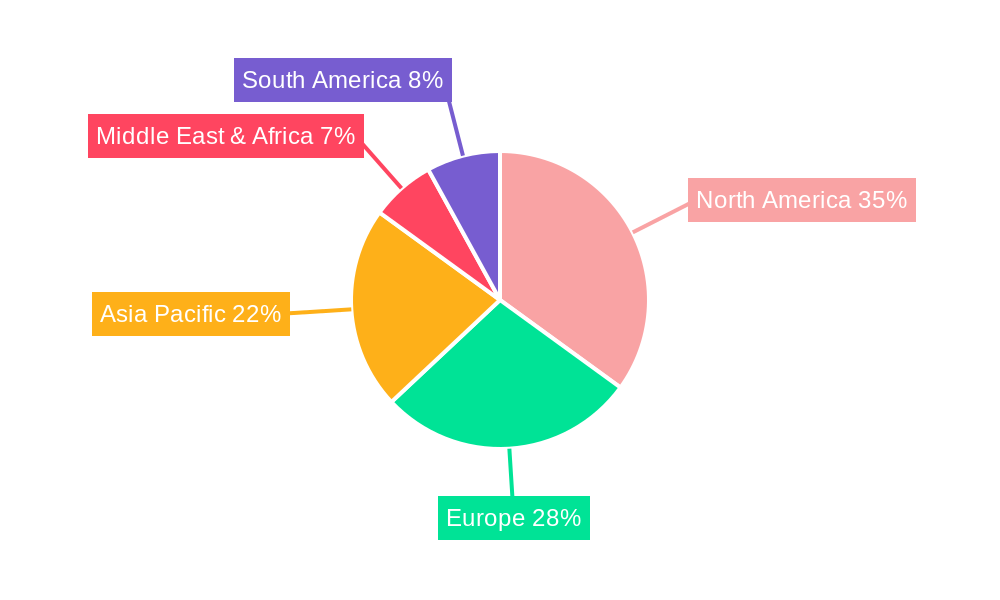
While the market benefits from numerous drivers, certain restraints such as the complexity of managing distributed systems and the need for skilled talent in microservices development and deployment may present challenges. However, advancements in orchestration tools like Kubernetes and the increasing availability of managed microservices platforms are effectively mitigating these concerns. The market is segmented into Public, Private, and Hybrid Cloud models, with Hybrid Cloud solutions gaining significant traction due to their flexibility and cost-effectiveness. Geographically, North America and Europe are expected to dominate the market, owing to the presence of major technology players and high adoption rates of cloud technologies. The Asia Pacific region, particularly China and India, is anticipated to emerge as a significant growth engine, driven by the rapid digitalization of economies and a burgeoning startup ecosystem embracing microservices for rapid innovation.
This comprehensive report delves into the dynamic and rapidly evolving cloud microservices market, providing actionable insights for industry stakeholders. Explore the pivotal role of microservices architecture in modern application development, driving innovation and operational efficiency across diverse industries. With a forecast period spanning 2025–2033, this report offers a deep dive into market trends, growth drivers, and competitive landscapes, empowering strategic decision-making in the cloud-native era.
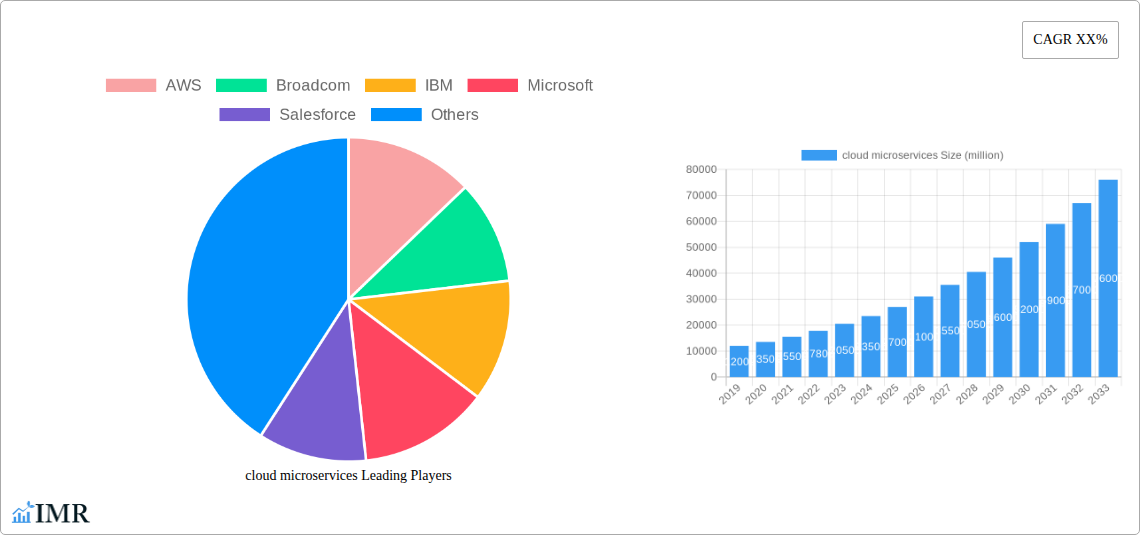
Cloud Microservices Market Dynamics & Structure
The global cloud microservices market is characterized by a moderate to high concentration, driven by the strategic importance of agility and scalability in digital transformation initiatives. Technological innovation remains a primary driver, with continuous advancements in containerization, orchestration, serverless computing, and API management fueling adoption. Regulatory frameworks are evolving, influencing data privacy and security standards, thereby shaping microservices implementation strategies. Competitive product substitutes, such as monolithic architectures and traditional service-oriented architectures (SOA), are gradually losing ground as the benefits of microservices become more apparent. End-user demographics are increasingly skewed towards IT-savvy organizations seeking faster development cycles and reduced time-to-market. Mergers and acquisitions (M&A) are a significant trend, with an estimated XX million unit deal volume in the last fiscal year, as larger players consolidate capabilities and acquire niche expertise.
- Market Concentration: Moderately concentrated with key players dominating specific segments.
- Innovation Drivers: Containerization (Docker, Kubernetes), serverless computing, API gateways, and AI/ML integration for service management.
- Regulatory Impact: Data localization, GDPR, and CCPA influencing security and deployment models.
- Competitive Landscape: Competition from established monolithic solutions and evolving API-first strategies.
- End-User Profile: Primarily tech-forward enterprises and startups across BFSI, Retail, and IT/ITES sectors.
- M&A Activity: Strategic acquisitions aimed at expanding service offerings and market reach.
Cloud Microservices Growth Trends & Insights
The cloud microservices market is experiencing robust growth, projected to reach an estimated market size of $XXX million in 2025, with a compelling Compound Annual Growth Rate (CAGR) of XX% during the 2025–2033 forecast period. This expansion is underpinned by a significant surge in adoption rates as organizations recognize the inherent advantages of breaking down complex applications into smaller, independent services. Technological disruptions, including the widespread adoption of Kubernetes for container orchestration and the rise of service meshes for inter-service communication, are accelerating this trend. Consumer behavior shifts, with an increasing demand for personalized, real-time digital experiences, are directly influencing businesses to leverage microservices for greater responsiveness and adaptability. The market penetration is expected to reach XX% by 2033, reflecting its transition from an emerging technology to a mainstream architectural paradigm. Historical data from 2019–2024 indicates a steady upward trajectory, with early adopters demonstrating substantial performance improvements.
The increasing complexity of modern applications, coupled with the growing imperative for businesses to innovate at an unprecedented pace, has positioned cloud microservices as a critical enabler of digital transformation. Organizations are moving away from rigid, monolithic architectures that are difficult to scale, update, and maintain. Microservices, by contrast, offer a flexible and modular approach, allowing individual services to be developed, deployed, and scaled independently. This independence translates into faster release cycles, reduced development costs, and improved resilience. The adoption of cloud-native technologies, such as containers and orchestration platforms, has further democratized the implementation of microservices, making them accessible to a wider range of businesses. The shift towards a decentralized, service-oriented approach is not merely a technological trend but a fundamental business strategy aimed at enhancing agility and fostering innovation in an increasingly competitive digital landscape.
Furthermore, the evolution of cloud infrastructure, including the maturation of public, private, and hybrid cloud offerings, provides a fertile ground for microservices deployment. Businesses can now choose the optimal cloud environment that aligns with their specific security, compliance, and performance requirements. This flexibility, combined with the availability of managed microservices platforms and tools, significantly lowers the barrier to entry. The growing ecosystem of specialized microservices vendors, offering solutions for API management, service discovery, observability, and security, further empowers organizations to build and manage complex microservices architectures effectively. As businesses continue to prioritize digital experiences and data-driven decision-making, the demand for the agility and scalability that cloud microservices provide is expected to remain exceptionally strong.
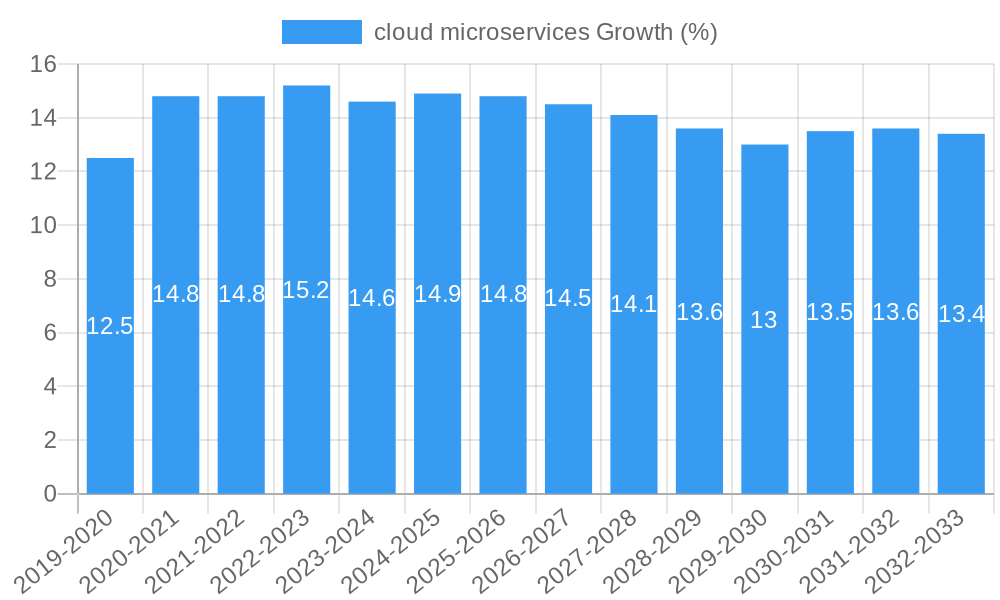
Dominant Regions, Countries, or Segments in Cloud Microservices
The IT and ITES segment is currently the dominant force driving growth in the cloud microservices market. This leadership is attributable to the inherent need within the IT sector for agile development, rapid deployment, and continuous innovation. The increasing reliance on cloud-native architectures for building scalable and resilient applications positions microservices as a cornerstone of IT operations. Within this segment, North America and Europe are leading regions, owing to their advanced digital infrastructure, high adoption of cloud computing, and strong presence of technology-focused enterprises. The BFSI sector is also a significant contributor, driven by the demand for enhanced customer experiences, regulatory compliance, and the need for real-time transaction processing.
- Dominant Segment: IT and ITES, driven by digital transformation initiatives and the need for agile development.
- Leading Regions: North America and Europe, due to mature cloud ecosystems and high technology adoption.
- Key Drivers in IT/ITES: Need for faster time-to-market, scalability, and cost optimization.
- BFSI Sector Growth: Fueled by digital banking, fintech innovation, and stringent regulatory demands.
- Hybrid Cloud Adoption: Increasingly favored across segments for balancing flexibility and control.
- Telecommunication Segment: Growing importance with 5G rollout and the demand for agile network services.
- Retail and E-commerce: Leverages microservices for personalized customer experiences and scalable online operations.
The BFSI sector, for instance, is actively migrating legacy systems to microservices architectures to enable faster deployment of new financial products, improve customer onboarding processes, and enhance fraud detection capabilities. This is further supported by supportive economic policies and a push for digital inclusion within many economies. The Telecommunication sector is also witnessing substantial growth, with the rollout of 5G networks requiring highly agile and scalable infrastructure, which microservices architecture is ideally suited to provide. The increasing demand for enhanced network services, IoT applications, and edge computing is propelling the adoption of microservices in this domain.
In terms of cloud deployment types, Hybrid Cloud solutions are emerging as a preferred choice for many organizations. This preference stems from the ability of hybrid clouds to offer the best of both worlds: the scalability and agility of public clouds coupled with the security and control of private clouds. This allows businesses to strategically place sensitive workloads on private infrastructure while leveraging public cloud resources for less critical applications or for burst capacity. The Retail and E-commerce segment is a prime example of where hybrid cloud deployments are prevalent, allowing for peak season scalability while maintaining data security and compliance. The market share of hybrid cloud deployments is projected to grow significantly, outperforming solely public or private cloud models in the coming years.
Cloud Microservices Product Landscape
The cloud microservices product landscape is characterized by a proliferation of innovative solutions focused on simplifying development, deployment, and management. Key advancements include enhanced container orchestration platforms like Kubernetes, offering sophisticated scheduling, scaling, and self-healing capabilities for microservices. API gateways are evolving to provide robust security, traffic management, and developer portals. Service meshes are gaining traction for their ability to manage inter-service communication, observability, and security in complex microservices environments. Serverless computing options are maturing, allowing developers to focus on writing code without managing underlying infrastructure. Performance metrics are increasingly centered on latency reduction, throughput improvement, and resource utilization efficiency. Unique selling propositions revolve around ease of use, comprehensive feature sets, and seamless integration with existing cloud ecosystems.
Key Drivers, Barriers & Challenges in Cloud Microservices
The cloud microservices market is propelled by several key drivers, including the escalating need for digital transformation, the pursuit of agile development methodologies, and the demand for scalable and resilient applications. Technological advancements in containerization, orchestration, and serverless computing further accelerate adoption. Economic factors such as cost optimization and faster time-to-market also play a crucial role.
Conversely, the market faces significant barriers and challenges. The inherent complexity of managing a distributed system can lead to operational overhead and require specialized skillsets. Security concerns related to inter-service communication and data consistency are paramount. Integration challenges with legacy systems and the potential for vendor lock-in are also critical considerations.
- Key Drivers: Digital transformation imperative, agile development demand, scalability needs, technological advancements (Kubernetes, serverless), cost efficiency.
- Barriers & Challenges: Architectural complexity, distributed system management, security vulnerabilities, integration with legacy systems, skill gap, debugging challenges, increased operational overhead.
Emerging Opportunities in Cloud Microservices
Emerging opportunities in the cloud microservices sector lie in the development of AI-powered microservices for intelligent automation and predictive analytics. The growing adoption of edge computing presents a significant avenue for microservices to be deployed closer to data sources, enabling real-time processing and reduced latency. Untapped markets in developing economies, with increasing digitalization efforts, offer substantial growth potential. Furthermore, the evolution of decentralized applications (dApps) leveraging blockchain technology could see microservices play a crucial role in their architecture.
Growth Accelerators in the Cloud Microservices Industry
Growth accelerators in the cloud microservices industry are predominantly driven by continuous technological breakthroughs. The ongoing maturation of AI and machine learning for service management and optimization, coupled with the standardization of APIs and protocols, is fostering greater interoperability. Strategic partnerships between cloud providers, software vendors, and system integrators are crucial for expanding market reach and offering comprehensive solutions. Market expansion strategies, including targeting emerging industries and developing tailored microservices solutions for specific use cases, will further fuel long-term growth.
Key Players Shaping the Cloud Microservices Market
- AWS
- Microsoft
- Google
- IBM
- Oracle
- Broadcom
- Salesforce
- Infosys
- TCS
- Pivotal Software (now VMware Tanzu)
- NGINX
- Syntel (acquired by Tech Mahindra)
- SmartBear Software
- Marlabs
- RapidValue Solutions
- Kontena (discontinued)
- Macaw Software
- Unifyed
- RoboMQ
- Idexcel
- Weaveworks
- Contino
- OpenLegacy
- CoScale (acquired by Datadog)
- Netifi (now part of Salesforce)
Notable Milestones in Cloud Microservices Sector
- 2019: Increased adoption of Kubernetes as the de facto standard for container orchestration.
- 2020: Significant growth in serverless computing adoption for event-driven microservices.
- 2021: Enhanced focus on DevSecOps practices for secure microservices development and deployment.
- 2022: Rise of service mesh technologies (e.g., Istio, Linkerd) for managing complex microservices communication.
- 2023: Expansion of AI/ML capabilities for automated microservices management and observability.
- 2024: Growing interest in GitOps methodologies for declarative microservices deployment and management.
- Early 2025: Introduction of new security frameworks specifically designed for distributed microservices architectures.
In-Depth Cloud Microservices Market Outlook
- 2019: Increased adoption of Kubernetes as the de facto standard for container orchestration.
- 2020: Significant growth in serverless computing adoption for event-driven microservices.
- 2021: Enhanced focus on DevSecOps practices for secure microservices development and deployment.
- 2022: Rise of service mesh technologies (e.g., Istio, Linkerd) for managing complex microservices communication.
- 2023: Expansion of AI/ML capabilities for automated microservices management and observability.
- 2024: Growing interest in GitOps methodologies for declarative microservices deployment and management.
- Early 2025: Introduction of new security frameworks specifically designed for distributed microservices architectures.
In-Depth Cloud Microservices Market Outlook
The future of the cloud microservices market is exceptionally promising, driven by ongoing digital transformation initiatives and the persistent demand for agile, scalable, and resilient applications. Key growth accelerators will include the continued evolution of AI and machine learning for intelligent automation, the standardization of APIs, and the expansion of edge computing. Strategic partnerships and the development of industry-specific solutions will be crucial for unlocking new market opportunities. The market is poised for sustained expansion as businesses increasingly recognize microservices as a fundamental enabler of innovation and competitive advantage in the digital economy.
cloud microservices Segmentation
-
1. Application
- 1.1. Retail and E-commerce
- 1.2. Healthcare
- 1.3. Media and Entertainment
- 1.4. BFSI
- 1.5. IT and ITES
- 1.6. Government
- 1.7. Transportation and Logistics
- 1.8. Manufacturing
- 1.9. Telecommunication
-
2. Types
- 2.1. Public Cloud
- 2.2. Private Cloud
- 2.3. Hybrid Cloud
cloud microservices Segmentation By Geography
-
1. North America
- 1.1. United States
- 1.2. Canada
- 1.3. Mexico
-
2. South America
- 2.1. Brazil
- 2.2. Argentina
- 2.3. Rest of South America
-
3. Europe
- 3.1. United Kingdom
- 3.2. Germany
- 3.3. France
- 3.4. Italy
- 3.5. Spain
- 3.6. Russia
- 3.7. Benelux
- 3.8. Nordics
- 3.9. Rest of Europe
-
4. Middle East & Africa
- 4.1. Turkey
- 4.2. Israel
- 4.3. GCC
- 4.4. North Africa
- 4.5. South Africa
- 4.6. Rest of Middle East & Africa
-
5. Asia Pacific
- 5.1. China
- 5.2. India
- 5.3. Japan
- 5.4. South Korea
- 5.5. ASEAN
- 5.6. Oceania
- 5.7. Rest of Asia Pacific
cloud microservices REPORT HIGHLIGHTS
| Aspects | Details |
|---|---|
| Study Period | 2019-2033 |
| Base Year | 2024 |
| Estimated Year | 2025 |
| Forecast Period | 2025-2033 |
| Historical Period | 2019-2024 |
| Growth Rate | CAGR of XX% from 2019-2033 |
| Segmentation |
|
Table of Contents
- 1. Introduction
- 1.1. Research Scope
- 1.2. Market Segmentation
- 1.3. Research Methodology
- 1.4. Definitions and Assumptions
- 2. Executive Summary
- 2.1. Introduction
- 3. Market Dynamics
- 3.1. Introduction
- 3.2. Market Drivers
- 3.3. Market Restrains
- 3.4. Market Trends
- 4. Market Factor Analysis
- 4.1. Porters Five Forces
- 4.2. Supply/Value Chain
- 4.3. PESTEL analysis
- 4.4. Market Entropy
- 4.5. Patent/Trademark Analysis
- 5. Global cloud microservices Analysis, Insights and Forecast, 2019-2031
- 5.1. Market Analysis, Insights and Forecast - by Application
- 5.1.1. Retail and E-commerce
- 5.1.2. Healthcare
- 5.1.3. Media and Entertainment
- 5.1.4. BFSI
- 5.1.5. IT and ITES
- 5.1.6. Government
- 5.1.7. Transportation and Logistics
- 5.1.8. Manufacturing
- 5.1.9. Telecommunication
- 5.2. Market Analysis, Insights and Forecast - by Types
- 5.2.1. Public Cloud
- 5.2.2. Private Cloud
- 5.2.3. Hybrid Cloud
- 5.3. Market Analysis, Insights and Forecast - by Region
- 5.3.1. North America
- 5.3.2. South America
- 5.3.3. Europe
- 5.3.4. Middle East & Africa
- 5.3.5. Asia Pacific
- 5.1. Market Analysis, Insights and Forecast - by Application
- 6. North America cloud microservices Analysis, Insights and Forecast, 2019-2031
- 6.1. Market Analysis, Insights and Forecast - by Application
- 6.1.1. Retail and E-commerce
- 6.1.2. Healthcare
- 6.1.3. Media and Entertainment
- 6.1.4. BFSI
- 6.1.5. IT and ITES
- 6.1.6. Government
- 6.1.7. Transportation and Logistics
- 6.1.8. Manufacturing
- 6.1.9. Telecommunication
- 6.2. Market Analysis, Insights and Forecast - by Types
- 6.2.1. Public Cloud
- 6.2.2. Private Cloud
- 6.2.3. Hybrid Cloud
- 6.1. Market Analysis, Insights and Forecast - by Application
- 7. South America cloud microservices Analysis, Insights and Forecast, 2019-2031
- 7.1. Market Analysis, Insights and Forecast - by Application
- 7.1.1. Retail and E-commerce
- 7.1.2. Healthcare
- 7.1.3. Media and Entertainment
- 7.1.4. BFSI
- 7.1.5. IT and ITES
- 7.1.6. Government
- 7.1.7. Transportation and Logistics
- 7.1.8. Manufacturing
- 7.1.9. Telecommunication
- 7.2. Market Analysis, Insights and Forecast - by Types
- 7.2.1. Public Cloud
- 7.2.2. Private Cloud
- 7.2.3. Hybrid Cloud
- 7.1. Market Analysis, Insights and Forecast - by Application
- 8. Europe cloud microservices Analysis, Insights and Forecast, 2019-2031
- 8.1. Market Analysis, Insights and Forecast - by Application
- 8.1.1. Retail and E-commerce
- 8.1.2. Healthcare
- 8.1.3. Media and Entertainment
- 8.1.4. BFSI
- 8.1.5. IT and ITES
- 8.1.6. Government
- 8.1.7. Transportation and Logistics
- 8.1.8. Manufacturing
- 8.1.9. Telecommunication
- 8.2. Market Analysis, Insights and Forecast - by Types
- 8.2.1. Public Cloud
- 8.2.2. Private Cloud
- 8.2.3. Hybrid Cloud
- 8.1. Market Analysis, Insights and Forecast - by Application
- 9. Middle East & Africa cloud microservices Analysis, Insights and Forecast, 2019-2031
- 9.1. Market Analysis, Insights and Forecast - by Application
- 9.1.1. Retail and E-commerce
- 9.1.2. Healthcare
- 9.1.3. Media and Entertainment
- 9.1.4. BFSI
- 9.1.5. IT and ITES
- 9.1.6. Government
- 9.1.7. Transportation and Logistics
- 9.1.8. Manufacturing
- 9.1.9. Telecommunication
- 9.2. Market Analysis, Insights and Forecast - by Types
- 9.2.1. Public Cloud
- 9.2.2. Private Cloud
- 9.2.3. Hybrid Cloud
- 9.1. Market Analysis, Insights and Forecast - by Application
- 10. Asia Pacific cloud microservices Analysis, Insights and Forecast, 2019-2031
- 10.1. Market Analysis, Insights and Forecast - by Application
- 10.1.1. Retail and E-commerce
- 10.1.2. Healthcare
- 10.1.3. Media and Entertainment
- 10.1.4. BFSI
- 10.1.5. IT and ITES
- 10.1.6. Government
- 10.1.7. Transportation and Logistics
- 10.1.8. Manufacturing
- 10.1.9. Telecommunication
- 10.2. Market Analysis, Insights and Forecast - by Types
- 10.2.1. Public Cloud
- 10.2.2. Private Cloud
- 10.2.3. Hybrid Cloud
- 10.1. Market Analysis, Insights and Forecast - by Application
- 11. Competitive Analysis
- 11.1. Global Market Share Analysis 2024
- 11.2. Company Profiles
- 11.2.1 AWS
- 11.2.1.1. Overview
- 11.2.1.2. Products
- 11.2.1.3. SWOT Analysis
- 11.2.1.4. Recent Developments
- 11.2.1.5. Financials (Based on Availability)
- 11.2.2 Broadcom
- 11.2.2.1. Overview
- 11.2.2.2. Products
- 11.2.2.3. SWOT Analysis
- 11.2.2.4. Recent Developments
- 11.2.2.5. Financials (Based on Availability)
- 11.2.3 IBM
- 11.2.3.1. Overview
- 11.2.3.2. Products
- 11.2.3.3. SWOT Analysis
- 11.2.3.4. Recent Developments
- 11.2.3.5. Financials (Based on Availability)
- 11.2.4 Microsoft
- 11.2.4.1. Overview
- 11.2.4.2. Products
- 11.2.4.3. SWOT Analysis
- 11.2.4.4. Recent Developments
- 11.2.4.5. Financials (Based on Availability)
- 11.2.5 Salesforce
- 11.2.5.1. Overview
- 11.2.5.2. Products
- 11.2.5.3. SWOT Analysis
- 11.2.5.4. Recent Developments
- 11.2.5.5. Financials (Based on Availability)
- 11.2.6 Infosys
- 11.2.6.1. Overview
- 11.2.6.2. Products
- 11.2.6.3. SWOT Analysis
- 11.2.6.4. Recent Developments
- 11.2.6.5. Financials (Based on Availability)
- 11.2.7 NGINX
- 11.2.7.1. Overview
- 11.2.7.2. Products
- 11.2.7.3. SWOT Analysis
- 11.2.7.4. Recent Developments
- 11.2.7.5. Financials (Based on Availability)
- 11.2.8 Oracle
- 11.2.8.1. Overview
- 11.2.8.2. Products
- 11.2.8.3. SWOT Analysis
- 11.2.8.4. Recent Developments
- 11.2.8.5. Financials (Based on Availability)
- 11.2.9 Pivotal Software
- 11.2.9.1. Overview
- 11.2.9.2. Products
- 11.2.9.3. SWOT Analysis
- 11.2.9.4. Recent Developments
- 11.2.9.5. Financials (Based on Availability)
- 11.2.10 Syntel
- 11.2.10.1. Overview
- 11.2.10.2. Products
- 11.2.10.3. SWOT Analysis
- 11.2.10.4. Recent Developments
- 11.2.10.5. Financials (Based on Availability)
- 11.2.11 SmartBear Software
- 11.2.11.1. Overview
- 11.2.11.2. Products
- 11.2.11.3. SWOT Analysis
- 11.2.11.4. Recent Developments
- 11.2.11.5. Financials (Based on Availability)
- 11.2.12 Marlabs
- 11.2.12.1. Overview
- 11.2.12.2. Products
- 11.2.12.3. SWOT Analysis
- 11.2.12.4. Recent Developments
- 11.2.12.5. Financials (Based on Availability)
- 11.2.13 RapidValue Solutions
- 11.2.13.1. Overview
- 11.2.13.2. Products
- 11.2.13.3. SWOT Analysis
- 11.2.13.4. Recent Developments
- 11.2.13.5. Financials (Based on Availability)
- 11.2.14 Kontena
- 11.2.14.1. Overview
- 11.2.14.2. Products
- 11.2.14.3. SWOT Analysis
- 11.2.14.4. Recent Developments
- 11.2.14.5. Financials (Based on Availability)
- 11.2.15 Macaw Software
- 11.2.15.1. Overview
- 11.2.15.2. Products
- 11.2.15.3. SWOT Analysis
- 11.2.15.4. Recent Developments
- 11.2.15.5. Financials (Based on Availability)
- 11.2.16 Unifyed
- 11.2.16.1. Overview
- 11.2.16.2. Products
- 11.2.16.3. SWOT Analysis
- 11.2.16.4. Recent Developments
- 11.2.16.5. Financials (Based on Availability)
- 11.2.17 RoboMQ
- 11.2.17.1. Overview
- 11.2.17.2. Products
- 11.2.17.3. SWOT Analysis
- 11.2.17.4. Recent Developments
- 11.2.17.5. Financials (Based on Availability)
- 11.2.18 Idexcel
- 11.2.18.1. Overview
- 11.2.18.2. Products
- 11.2.18.3. SWOT Analysis
- 11.2.18.4. Recent Developments
- 11.2.18.5. Financials (Based on Availability)
- 11.2.19 Weaveworks
- 11.2.19.1. Overview
- 11.2.19.2. Products
- 11.2.19.3. SWOT Analysis
- 11.2.19.4. Recent Developments
- 11.2.19.5. Financials (Based on Availability)
- 11.2.20 Contino
- 11.2.20.1. Overview
- 11.2.20.2. Products
- 11.2.20.3. SWOT Analysis
- 11.2.20.4. Recent Developments
- 11.2.20.5. Financials (Based on Availability)
- 11.2.21 OpenLegacy
- 11.2.21.1. Overview
- 11.2.21.2. Products
- 11.2.21.3. SWOT Analysis
- 11.2.21.4. Recent Developments
- 11.2.21.5. Financials (Based on Availability)
- 11.2.22 CoScale
- 11.2.22.1. Overview
- 11.2.22.2. Products
- 11.2.22.3. SWOT Analysis
- 11.2.22.4. Recent Developments
- 11.2.22.5. Financials (Based on Availability)
- 11.2.23 Software
- 11.2.23.1. Overview
- 11.2.23.2. Products
- 11.2.23.3. SWOT Analysis
- 11.2.23.4. Recent Developments
- 11.2.23.5. Financials (Based on Availability)
- 11.2.24 Netifi
- 11.2.24.1. Overview
- 11.2.24.2. Products
- 11.2.24.3. SWOT Analysis
- 11.2.24.4. Recent Developments
- 11.2.24.5. Financials (Based on Availability)
- 11.2.25 TCS
- 11.2.25.1. Overview
- 11.2.25.2. Products
- 11.2.25.3. SWOT Analysis
- 11.2.25.4. Recent Developments
- 11.2.25.5. Financials (Based on Availability)
- 11.2.1 AWS
List of Figures
- Figure 1: Global cloud microservices Revenue Breakdown (million, %) by Region 2024 & 2032
- Figure 2: North America cloud microservices Revenue (million), by Application 2024 & 2032
- Figure 3: North America cloud microservices Revenue Share (%), by Application 2024 & 2032
- Figure 4: North America cloud microservices Revenue (million), by Types 2024 & 2032
- Figure 5: North America cloud microservices Revenue Share (%), by Types 2024 & 2032
- Figure 6: North America cloud microservices Revenue (million), by Country 2024 & 2032
- Figure 7: North America cloud microservices Revenue Share (%), by Country 2024 & 2032
- Figure 8: South America cloud microservices Revenue (million), by Application 2024 & 2032
- Figure 9: South America cloud microservices Revenue Share (%), by Application 2024 & 2032
- Figure 10: South America cloud microservices Revenue (million), by Types 2024 & 2032
- Figure 11: South America cloud microservices Revenue Share (%), by Types 2024 & 2032
- Figure 12: South America cloud microservices Revenue (million), by Country 2024 & 2032
- Figure 13: South America cloud microservices Revenue Share (%), by Country 2024 & 2032
- Figure 14: Europe cloud microservices Revenue (million), by Application 2024 & 2032
- Figure 15: Europe cloud microservices Revenue Share (%), by Application 2024 & 2032
- Figure 16: Europe cloud microservices Revenue (million), by Types 2024 & 2032
- Figure 17: Europe cloud microservices Revenue Share (%), by Types 2024 & 2032
- Figure 18: Europe cloud microservices Revenue (million), by Country 2024 & 2032
- Figure 19: Europe cloud microservices Revenue Share (%), by Country 2024 & 2032
- Figure 20: Middle East & Africa cloud microservices Revenue (million), by Application 2024 & 2032
- Figure 21: Middle East & Africa cloud microservices Revenue Share (%), by Application 2024 & 2032
- Figure 22: Middle East & Africa cloud microservices Revenue (million), by Types 2024 & 2032
- Figure 23: Middle East & Africa cloud microservices Revenue Share (%), by Types 2024 & 2032
- Figure 24: Middle East & Africa cloud microservices Revenue (million), by Country 2024 & 2032
- Figure 25: Middle East & Africa cloud microservices Revenue Share (%), by Country 2024 & 2032
- Figure 26: Asia Pacific cloud microservices Revenue (million), by Application 2024 & 2032
- Figure 27: Asia Pacific cloud microservices Revenue Share (%), by Application 2024 & 2032
- Figure 28: Asia Pacific cloud microservices Revenue (million), by Types 2024 & 2032
- Figure 29: Asia Pacific cloud microservices Revenue Share (%), by Types 2024 & 2032
- Figure 30: Asia Pacific cloud microservices Revenue (million), by Country 2024 & 2032
- Figure 31: Asia Pacific cloud microservices Revenue Share (%), by Country 2024 & 2032
List of Tables
- Table 1: Global cloud microservices Revenue million Forecast, by Region 2019 & 2032
- Table 2: Global cloud microservices Revenue million Forecast, by Application 2019 & 2032
- Table 3: Global cloud microservices Revenue million Forecast, by Types 2019 & 2032
- Table 4: Global cloud microservices Revenue million Forecast, by Region 2019 & 2032
- Table 5: Global cloud microservices Revenue million Forecast, by Application 2019 & 2032
- Table 6: Global cloud microservices Revenue million Forecast, by Types 2019 & 2032
- Table 7: Global cloud microservices Revenue million Forecast, by Country 2019 & 2032
- Table 8: United States cloud microservices Revenue (million) Forecast, by Application 2019 & 2032
- Table 9: Canada cloud microservices Revenue (million) Forecast, by Application 2019 & 2032
- Table 10: Mexico cloud microservices Revenue (million) Forecast, by Application 2019 & 2032
- Table 11: Global cloud microservices Revenue million Forecast, by Application 2019 & 2032
- Table 12: Global cloud microservices Revenue million Forecast, by Types 2019 & 2032
- Table 13: Global cloud microservices Revenue million Forecast, by Country 2019 & 2032
- Table 14: Brazil cloud microservices Revenue (million) Forecast, by Application 2019 & 2032
- Table 15: Argentina cloud microservices Revenue (million) Forecast, by Application 2019 & 2032
- Table 16: Rest of South America cloud microservices Revenue (million) Forecast, by Application 2019 & 2032
- Table 17: Global cloud microservices Revenue million Forecast, by Application 2019 & 2032
- Table 18: Global cloud microservices Revenue million Forecast, by Types 2019 & 2032
- Table 19: Global cloud microservices Revenue million Forecast, by Country 2019 & 2032
- Table 20: United Kingdom cloud microservices Revenue (million) Forecast, by Application 2019 & 2032
- Table 21: Germany cloud microservices Revenue (million) Forecast, by Application 2019 & 2032
- Table 22: France cloud microservices Revenue (million) Forecast, by Application 2019 & 2032
- Table 23: Italy cloud microservices Revenue (million) Forecast, by Application 2019 & 2032
- Table 24: Spain cloud microservices Revenue (million) Forecast, by Application 2019 & 2032
- Table 25: Russia cloud microservices Revenue (million) Forecast, by Application 2019 & 2032
- Table 26: Benelux cloud microservices Revenue (million) Forecast, by Application 2019 & 2032
- Table 27: Nordics cloud microservices Revenue (million) Forecast, by Application 2019 & 2032
- Table 28: Rest of Europe cloud microservices Revenue (million) Forecast, by Application 2019 & 2032
- Table 29: Global cloud microservices Revenue million Forecast, by Application 2019 & 2032
- Table 30: Global cloud microservices Revenue million Forecast, by Types 2019 & 2032
- Table 31: Global cloud microservices Revenue million Forecast, by Country 2019 & 2032
- Table 32: Turkey cloud microservices Revenue (million) Forecast, by Application 2019 & 2032
- Table 33: Israel cloud microservices Revenue (million) Forecast, by Application 2019 & 2032
- Table 34: GCC cloud microservices Revenue (million) Forecast, by Application 2019 & 2032
- Table 35: North Africa cloud microservices Revenue (million) Forecast, by Application 2019 & 2032
- Table 36: South Africa cloud microservices Revenue (million) Forecast, by Application 2019 & 2032
- Table 37: Rest of Middle East & Africa cloud microservices Revenue (million) Forecast, by Application 2019 & 2032
- Table 38: Global cloud microservices Revenue million Forecast, by Application 2019 & 2032
- Table 39: Global cloud microservices Revenue million Forecast, by Types 2019 & 2032
- Table 40: Global cloud microservices Revenue million Forecast, by Country 2019 & 2032
- Table 41: China cloud microservices Revenue (million) Forecast, by Application 2019 & 2032
- Table 42: India cloud microservices Revenue (million) Forecast, by Application 2019 & 2032
- Table 43: Japan cloud microservices Revenue (million) Forecast, by Application 2019 & 2032
- Table 44: South Korea cloud microservices Revenue (million) Forecast, by Application 2019 & 2032
- Table 45: ASEAN cloud microservices Revenue (million) Forecast, by Application 2019 & 2032
- Table 46: Oceania cloud microservices Revenue (million) Forecast, by Application 2019 & 2032
- Table 47: Rest of Asia Pacific cloud microservices Revenue (million) Forecast, by Application 2019 & 2032
Frequently Asked Questions
1. What is the projected Compound Annual Growth Rate (CAGR) of the cloud microservices?
The projected CAGR is approximately XX%.
2. Which companies are prominent players in the cloud microservices?
Key companies in the market include AWS, Broadcom, IBM, Microsoft, Salesforce, Infosys, NGINX, Oracle, Pivotal Software, Syntel, SmartBear Software, Marlabs, RapidValue Solutions, Kontena, Macaw Software, Unifyed, RoboMQ, Idexcel, Weaveworks, Contino, OpenLegacy, CoScale, Software, Netifi, TCS.
3. What are the main segments of the cloud microservices?
The market segments include Application, Types.
4. Can you provide details about the market size?
The market size is estimated to be USD XXX million as of 2022.
5. What are some drivers contributing to market growth?
N/A
6. What are the notable trends driving market growth?
N/A
7. Are there any restraints impacting market growth?
N/A
8. Can you provide examples of recent developments in the market?
N/A
9. What pricing options are available for accessing the report?
Pricing options include single-user, multi-user, and enterprise licenses priced at USD 4350.00, USD 6525.00, and USD 8700.00 respectively.
10. Is the market size provided in terms of value or volume?
The market size is provided in terms of value, measured in million.
11. Are there any specific market keywords associated with the report?
Yes, the market keyword associated with the report is "cloud microservices," which aids in identifying and referencing the specific market segment covered.
12. How do I determine which pricing option suits my needs best?
The pricing options vary based on user requirements and access needs. Individual users may opt for single-user licenses, while businesses requiring broader access may choose multi-user or enterprise licenses for cost-effective access to the report.
13. Are there any additional resources or data provided in the cloud microservices report?
While the report offers comprehensive insights, it's advisable to review the specific contents or supplementary materials provided to ascertain if additional resources or data are available.
14. How can I stay updated on further developments or reports in the cloud microservices?
To stay informed about further developments, trends, and reports in the cloud microservices, consider subscribing to industry newsletters, following relevant companies and organizations, or regularly checking reputable industry news sources and publications.
Methodology
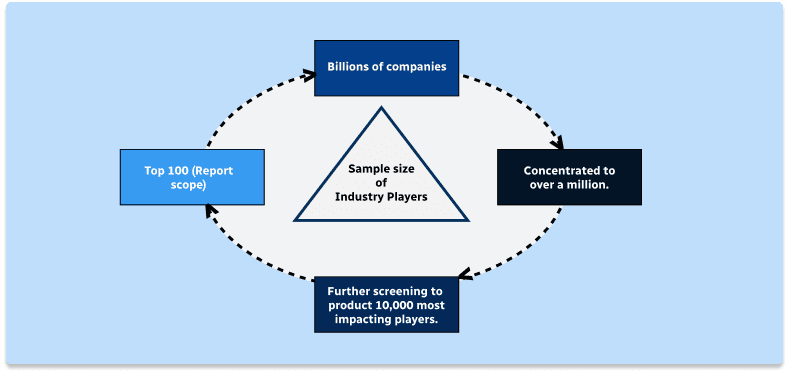
Step 1 - Identification of Relevant Samples Size from Population Database

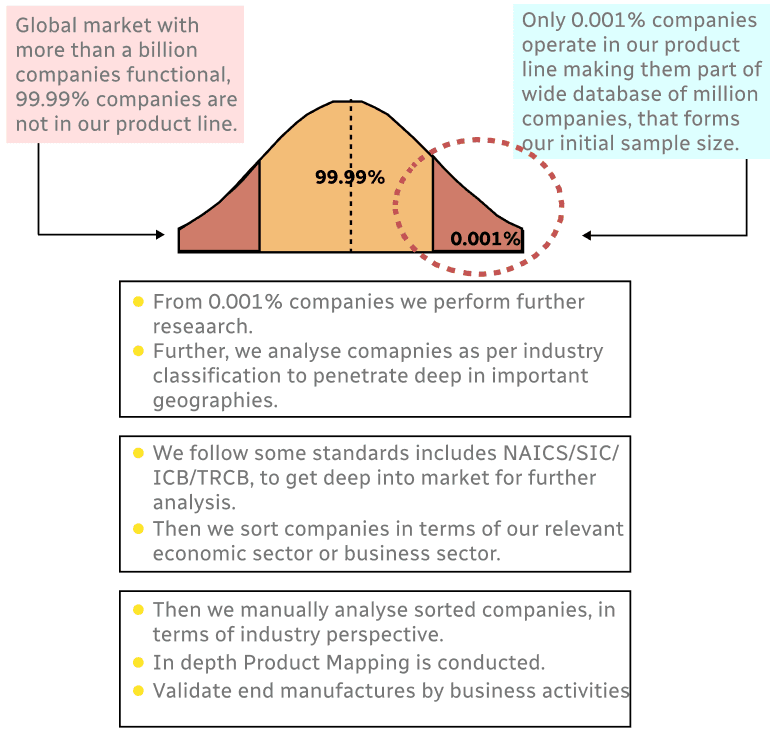
Step 2 - Approaches for Defining Global Market Size (Value, Volume* & Price*)
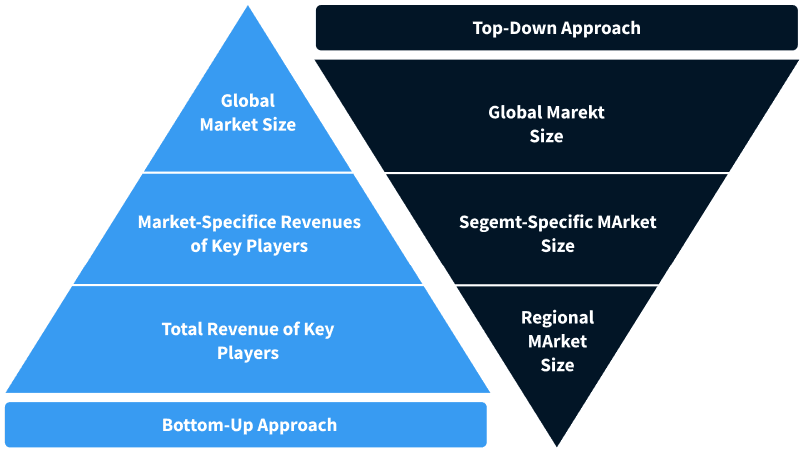
Note*: In applicable scenarios
Step 3 - Data Sources
Primary Research
- Web Analytics
- Survey Reports
- Research Institute
- Latest Research Reports
- Opinion Leaders
Secondary Research
- Annual Reports
- White Paper
- Latest Press Release
- Industry Association
- Paid Database
- Investor Presentations
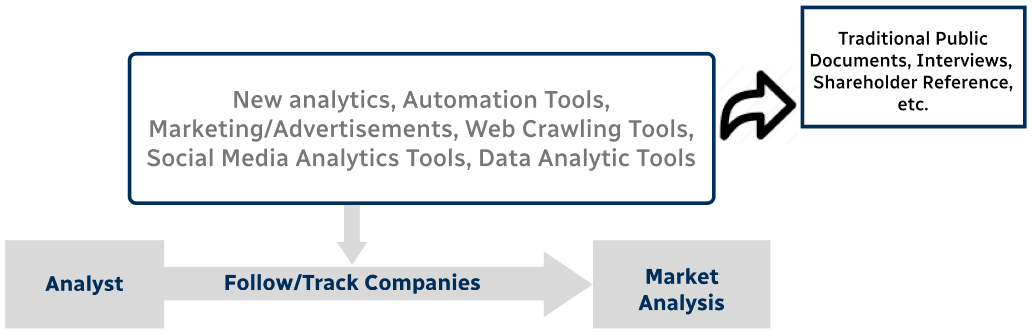
Step 4 - Data Triangulation
Involves using different sources of information in order to increase the validity of a study
These sources are likely to be stakeholders in a program - participants, other researchers, program staff, other community members, and so on.
Then we put all data in single framework & apply various statistical tools to find out the dynamic on the market.
During the analysis stage, feedback from the stakeholder groups would be compared to determine areas of agreement as well as areas of divergence